
Hotter Summers, Dirtier Air: Heatwaves and Lung Cancer in Europe
Updated 16 August 2026 | Original article 19 June 2026
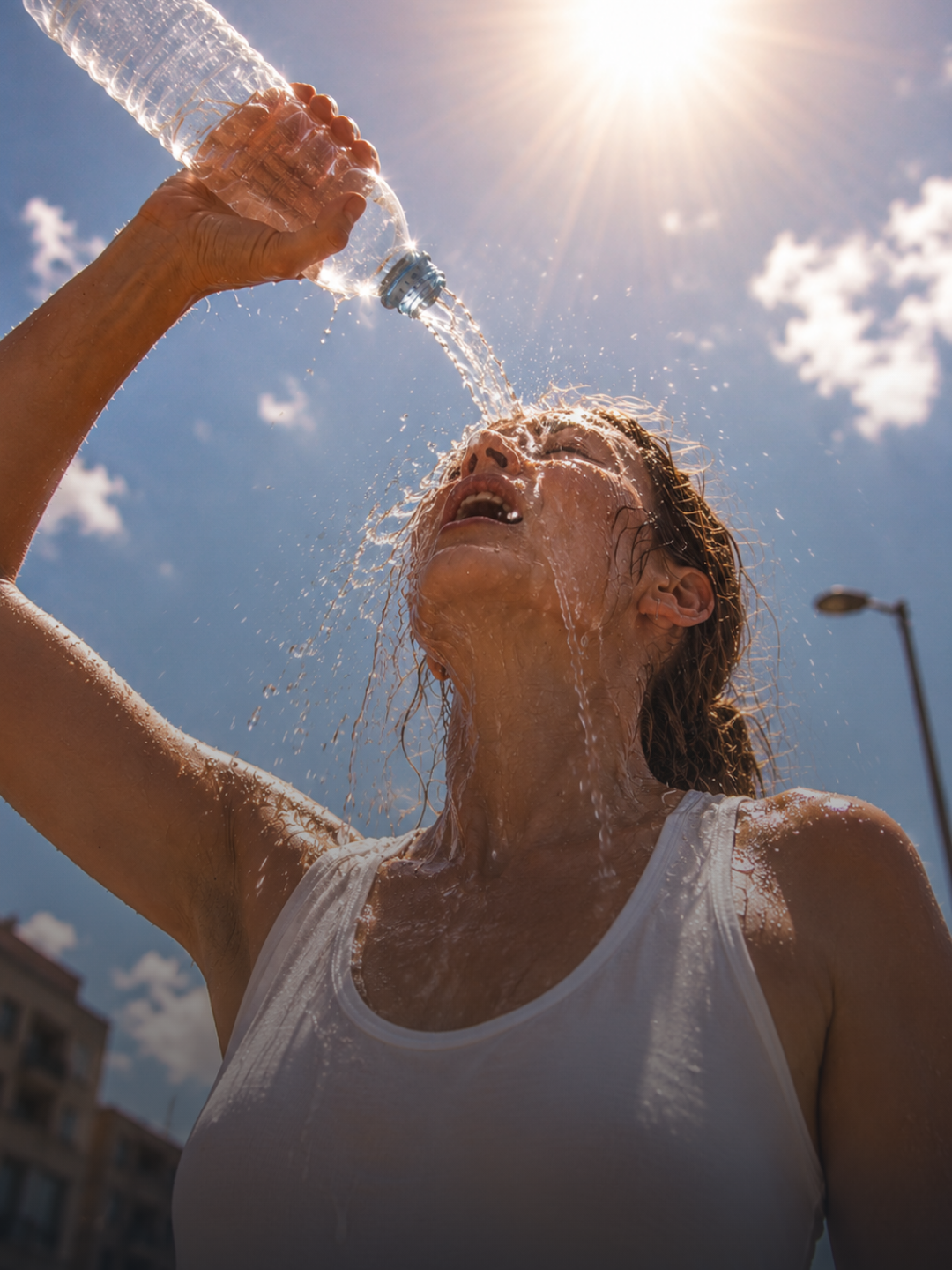
As this is written in June 2026, much of southern Europe is bracing for temperatures close to 40°C, only weeks after a deadly early-summer heatwave moved across the continent. Spain, France, Portugal and Italy are again under heat warnings, with nights so warm they offer little relief.
Extreme heat is dangerous in its own right. But it is not only a question of comfort, or even of heatstroke. Hotter summers also change the air we breathe, and that has a direct bearing on lung health and on lung cancer.
Why Europe's heatwaves keep coming
Heatwaves on this scale are no longer rare events. As greenhouse gases warm the planet, periods of extreme heat are arriving earlier, lasting longer and reaching higher temperatures. What once felt exceptional is becoming a regular feature of the European summer.
That trend carries a hidden cost for lungs, because heat and air pollution travel together.
How heat worsens the air we breathe
On hot, still, sunny days, traffic fumes and industrial emissions react with sunlight to form ground-level ozone, the main ingredient in summer smog. The hotter and brighter the conditions, the more ozone builds up.
Heat also brings drought, and drought feeds wildfires. Those fires fill the air with fine particle pollution, known as PM2.5, which can travel long distances far beyond the fire itself.
Both ozone and particle pollution make breathing harder. They can trigger coughing, breathlessness and asthma attacks, place strain on the heart, and worsen existing lung conditions. For people already living with lung cancer, days of poor air quality can be especially difficult.
The link to lung cancer
The connection runs deeper than symptoms on a bad-air day. Outdoor air pollution has been recognised as a cause of cancer since 2013, when the International Agency for Research on Cancer listed it as a Group 1 carcinogen, the same category as tobacco.
In April 2026, a major review by the Union for International Cancer Control and The George Institute for Global Health set out the scale. Drawing on 42 systematic reviews and meta-analyses, it attributed over 434,000 lung cancer cases worldwide each year to air pollution, and found that long-term exposure to PM2.5 raises a person's overall risk of cancer by around a tenth. Air pollution accounts for an estimated 27.5% of preventable lung cancers in women and 15.8% in men.
This is also central to the rise of lung cancer in people who have never smoked, a growing share of those diagnosed. For them, air pollution is among the most significant known risk factors. Lung cancer is not only a disease of individual behaviour. It is also a disease of environment and policy.
We set out the full evidence in our earlier piece, Air Pollution and Lung Cancer in Europe: What the Evidence Now Shows.
A European inequality story
Across Europe, air quality has improved over recent decades, and that progress is real. Deaths in the EU linked to fine particulate matter fell by almost half between 2005 and 2022.
But the gains have not been shared evenly. Eastern and south-eastern Europe carry by far the heaviest burden, with pollution levels in some regions several times higher than in the cleanest parts of the north. Where a person lives can change their exposure, and with it their risk.
That gap rarely sits alone. The same regions often have less access to specialist care, lower rates of molecular testing and longer delays to diagnosis. Air quality inequality is cancer inequality.
What needs to happen
Europe already has the framework for change. The revised Ambient Air Quality Directive, adopted in 2024, brings EU standards closer to World Health Organization guidance and sets a limit for fine particulate matter of 10 micrograms per cubic metre, to be met by 2030. Much of the continent still exceeds it.
A law only delivers if it is implemented, monitored and enforced, and if the communities most exposed have a say in how that happens. As heatwaves become a fixed part of European summers, climate action and clean air are not separate concerns from lung cancer. They are part of the same fight.
This is part of a wider shift. In its strategy to 2028, the Union for International Cancer Control treats lung cancer, tobacco control and air pollution as one connected priority, and the evidence review calls for air quality targets to be written into national cancer control plans and enforced in line with World Health Organization guidance. Clean air is no longer set apart from the fight against lung cancer. It is part of it.
At Lung Cancer Europe, we believe people living with lung cancer, and those at highest risk, belong in the conversation about Europe's air. The evidence is no longer in question. What remains is the will to act on it.
Editor’s update, 15 August 2026:
A new Guardian explainer reports that Europe is warming around twice as fast as other continents, with more frequent and intense heatwaves, wildfires and droughts. We are updating this article because these changes also affect air quality and lung health, including people affected by lung cancer.