
ctDNA and ctRNA in lung cancer: what can liquid biopsy tell us?
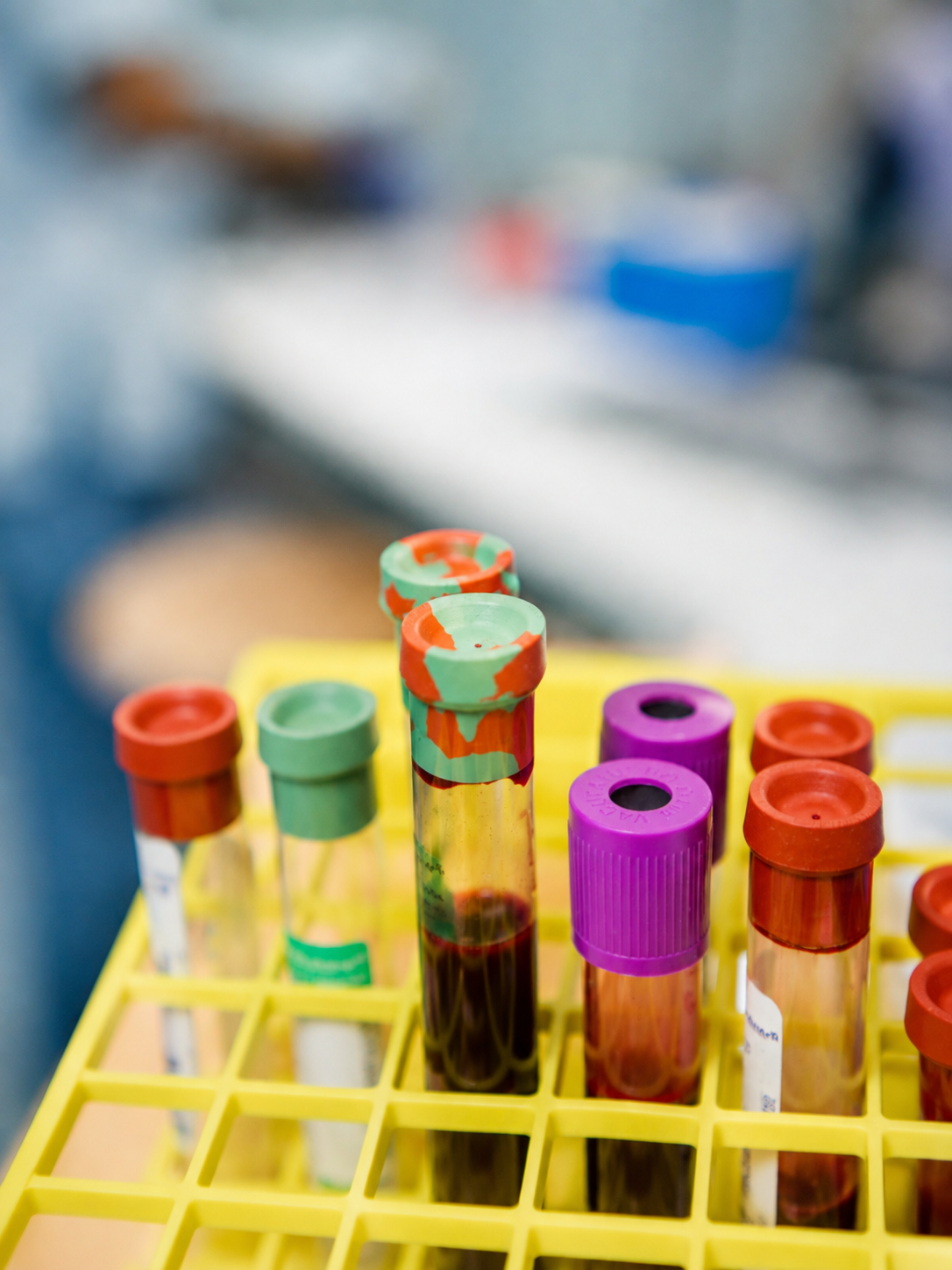
Blood tests are being used to reveal more information about lung tumours.
A liquid biopsy can look for tumour DNA in the blood to identify biomarkers that may guide treatment. Researchers are also studying tumour RNA, which can be particularly useful for finding some gene fusions.
New data due to be presented at the 2026 World Conference on Lung Cancer (WCLC) suggest that testing circulating tumour DNA (ctDNA) and circulating tumour RNA (ctRNA) together can identify some actionable rearrangements that ctDNA alone may miss.
But finding treatment targets is only one use of liquid biopsy. ctDNA is also being studied for monitoring cancer, identifying treatment resistance and detecting signs of residual disease after surgery.
Liquid biopsy in lung cancer
A tissue biopsy takes cells directly from a tumour. A liquid biopsy looks for material from a tumour in a sample of blood.
One of the main things tested is circulating tumour DNA, or ctDNA. Cancer cells can release small fragments of their DNA into the bloodstream. These fragments can contain genetic changes found in the tumour.
In advanced non-small cell lung cancer (NSCLC), ctDNA testing can help identify biomarkers linked to targeted treatments. It can be particularly useful when there is not enough tumour tissue available for full testing or when obtaining another tissue sample is difficult.
A recent JAMA review describes several uses for ctDNA in cancer, including identifying genetic changes that may affect treatment, monitoring progression and looking for residual cancer after treatment.
How ctDNA is used in NSCLC
Some lung cancers are driven by specific genetic changes. These can include changes involving EGFR, ALK, ROS1, BRAF, MET and RET, among others.
Finding one of these changes can affect which treatments are available.
ctDNA can also provide information as a cancer changes. For example, new genetic changes can develop when a tumour becomes resistant to treatment. Blood testing may sometimes identify these changes without another tissue biopsy.
There are limits. Not every tumour releases enough DNA into the blood to be detected. A negative ctDNA result therefore does not always mean that an actionable alteration is absent.
ctRNA and gene fusions
RNA is different from DNA.
DNA stores the genetic instructions in a cell. RNA helps the cell use those instructions.
Cancer cells can also release RNA into the bloodstream. This is called circulating tumour RNA, or ctRNA.
RNA can be useful when looking for gene fusions. A gene fusion occurs when parts of two different genes become joined together. Some gene fusions can drive lung cancer and can also identify people who may be eligible for targeted treatment.
DNA testing looks for the genetic rearrangement itself. RNA can show the message produced by that rearrangement. For some fusions, this can make the change easier to detect.
DNA and RNA are therefore useful for different types of alteration. Testing both can increase the chance of finding some gene fusions.
Evidence for combined ctDNA and ctRNA testing
The prospective LIQUIK study investigated combined ctDNA and ctRNA testing in people with newly diagnosed metastatic non-squamous NSCLC.
Adding ctRNA increased the detection of tissue-confirmed gene rearrangements by 28.6% compared with ctDNA alone. The combined liquid biopsy was also faster than tissue next-generation sequencing in the study.
The blood test still detected fewer biomarker-positive cases than tissue testing overall.
The researchers concluded that combined ctDNA and ctRNA testing could complement tissue testing, particularly when looking for actionable gene rearrangements.
New ctDNA and ctRNA data at WCLC 2026
A new analysis being presented at WCLC 2026 looked at combined ctDNA and ctRNA liquid biopsy testing in 602 people with NSCLC.
Researchers found that 38.5% had at least one actionable genetic alteration, meaning a change that could potentially affect treatment choice.
Among the findings involving actionable fusions and MET exon 14 skipping, ctRNA identified alterations that ctDNA testing had not detected.
The researchers reported 12 rearrangements detected only through ctRNA. Overall, adding ctRNA produced a 38.7% relative increase in the detection of actionable rearrangements compared with ctDNA alone.
The additional findings included changes involving ALK, ROS1 and RET.
The abstract, Enhanced Detection of Actionable Fusions in NSCLC Using Combined ctDNA and ctRNA Analysis, will be presented at WCLC 2026 in Seoul.
ctDNA after surgery
Liquid biopsy research is also moving into earlier-stage lung cancer.
After surgery, very small amounts of cancer can sometimes remain in the body without being visible on a scan. This is often called molecular residual disease (MRD).
Researchers are investigating whether ctDNA can help detect this residual disease and identify people at higher risk of recurrence.
A July 2026 study in npj Precision Oncology followed 119 people with resected NSCLC. Among people whose cancer later returned, longitudinal ctDNA monitoring detected MRD in 48.1%.
In those cases, ctDNA became detectable a median of 6.53 months before recurrence was seen on imaging. People who remained ctDNA-negative also had better outcomes in the study.
The result also shows an important limitation. More than half of the people whose cancer returned did not have MRD detected by the ctDNA method used in this study.
A negative result cannot currently confirm that no cancer remains.
The limits of liquid biopsy
Liquid biopsy does not replace tissue testing in every situation.
Tissue can provide information that a blood sample cannot, and some tumours release very little DNA or RNA into the bloodstream.
Results can also depend on the type of test used and the genetic change being investigated.
This means doctors may use tissue and blood testing together. If a liquid biopsy does not find an actionable alteration, further tissue testing may still be needed when it is possible and clinically appropriate.
The LIQUIK study also found differences between liquid biopsy assays. One ctDNA test detected some biomarkers that another missed, and vice versa.
How we test can affect what we find.
Where combined DNA and RNA testing could fit
The recent studies point in the same direction: adding RNA can find some actionable rearrangements that DNA-only blood testing misses.
For people with NSCLC, that can be important because identifying a targetable change may open up a different treatment option.
At the same time, liquid biopsy is being investigated for several different jobs. These include selecting treatment in advanced disease, identifying resistance changes, monitoring cancer and looking for residual disease after surgery.
These uses are not all at the same stage of development.
Combined ctDNA and ctRNA testing provides another way to gather molecular information about a tumour. The next question is how it should be used alongside tissue testing in routine NSCLC care.
Key points
Liquid biopsy looks for tumour material in blood.
ctDNA can identify genetic changes that may guide treatment in some people with advanced NSCLC.
ctRNA can add useful information, particularly for some gene fusions.
The LIQUIK study found that adding ctRNA increased detection of tissue-confirmed gene rearrangements by 28.6% compared with ctDNA alone.
New WCLC 2026 data in 602 people with NSCLC report a 38.7% relative increase in actionable rearrangement detection when ctRNA was added to ctDNA.
ctDNA is also being studied for monitoring treatment and detecting molecular residual disease after surgery.
A negative liquid biopsy does not rule out an actionable alteration or residual disease.
Tissue testing remains an important part of lung cancer diagnosis and biomarker testing.
Sources
Mezzanotte-Sharpe J, Piemonte K, Park BH.Liquid Biopsies for Cancer: A Translational Science Review. JAMA. Published 10 August 2026.Samol J, Ng D, et al.Prospective Multicenter Study Evaluating a Combined Circulating Tumor DNA and Circulating Tumor RNA Liquid Biopsy in Metastatic Non-Small Cell Lung Cancer (LIQUIK). JCO Precision Oncology. 2025.Wang BX, Jiang H, Ou W, et al.Perioperative ctDNA dynamics predict outcomes in resectable NSCLC using an ultrasensitive and cost-effective assay. npj Precision Oncology. Published 23 July 2026.Jani CT, Negret L, Dormady S, et al.Enhanced Detection of Actionable Fusions in NSCLC Using Combined ctDNA and ctRNA Analysis. WCLC 2026, abstract M011.05.