
Lung Cancer Europe at ERS Congress 2026
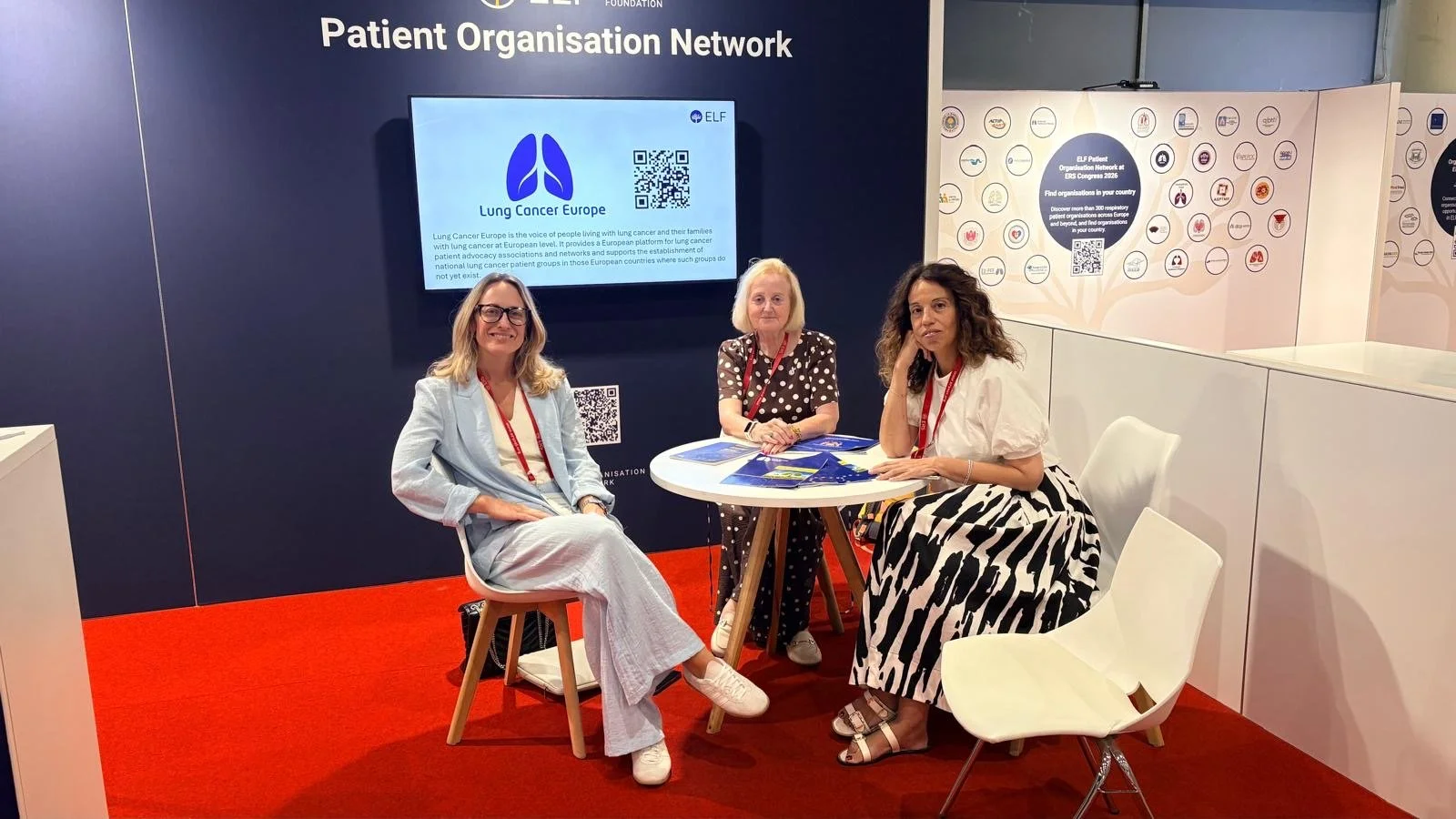
At the European Respiratory Society Congress 2026, Lung Cancer Europe is presenting two abstracts based on the experiences of people affected by lung cancer. One examines life with small-cell lung cancer across Europe. The other looks at how first-person stories were used to communicate support needs through our 2025 Get Supported campaign.
People living through lung cancer know where care, information and support fall short. That knowledge should be part of the evidence, not an afterthought.
This is central to Lung Cancer Europe’s work at ERS Congress 2026 in Barcelona.
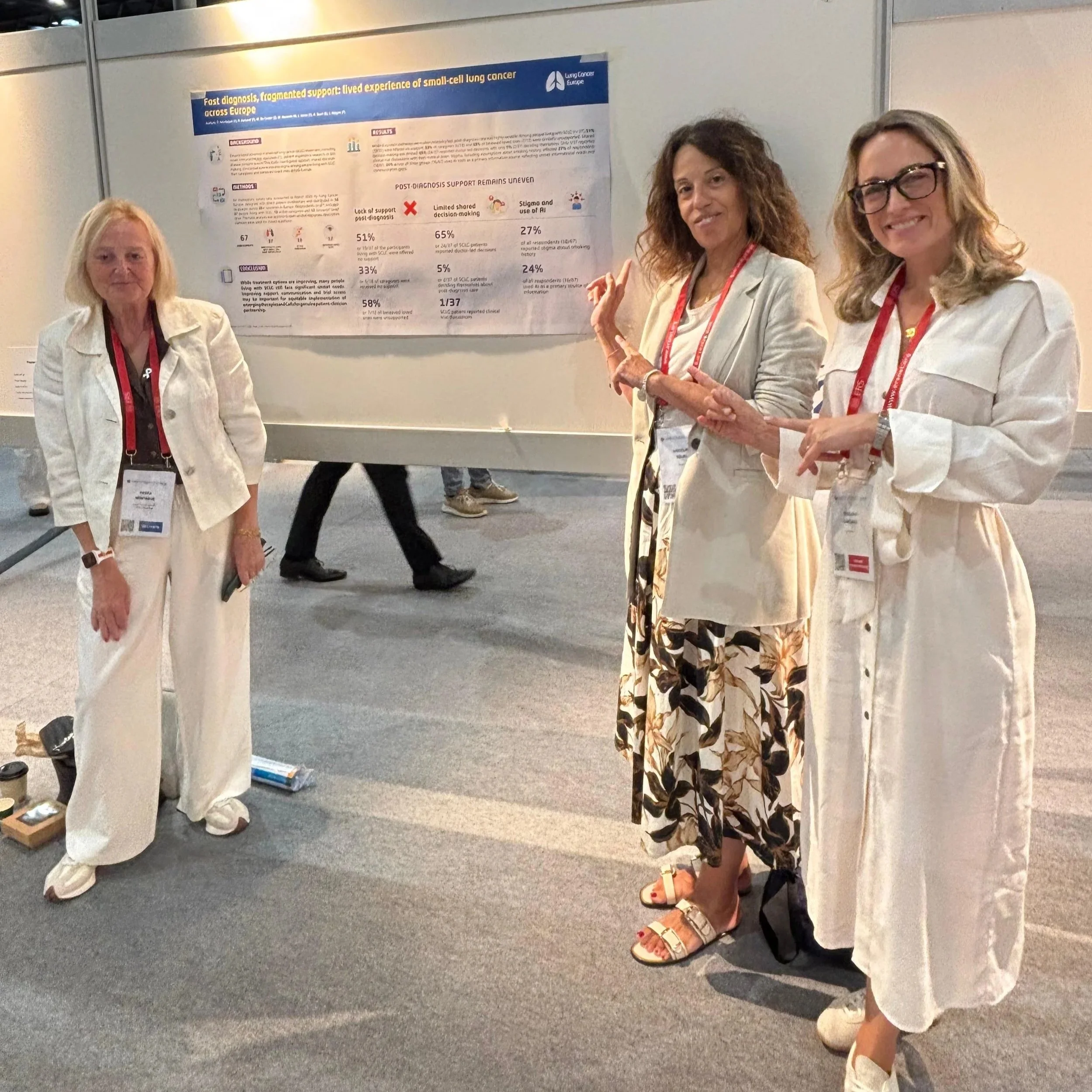
We are presenting two abstracts that use lived experience in different ways. In the first, people with direct experience took part in a survey about life with small-cell lung cancer. In the second, experiences shared by people living with lung cancer and caregivers became part of a European awareness campaign.
The abstracts have different aims and methods. What connects them is whose knowledge they start with.
Two ERS abstracts focused on lung cancer lived experience
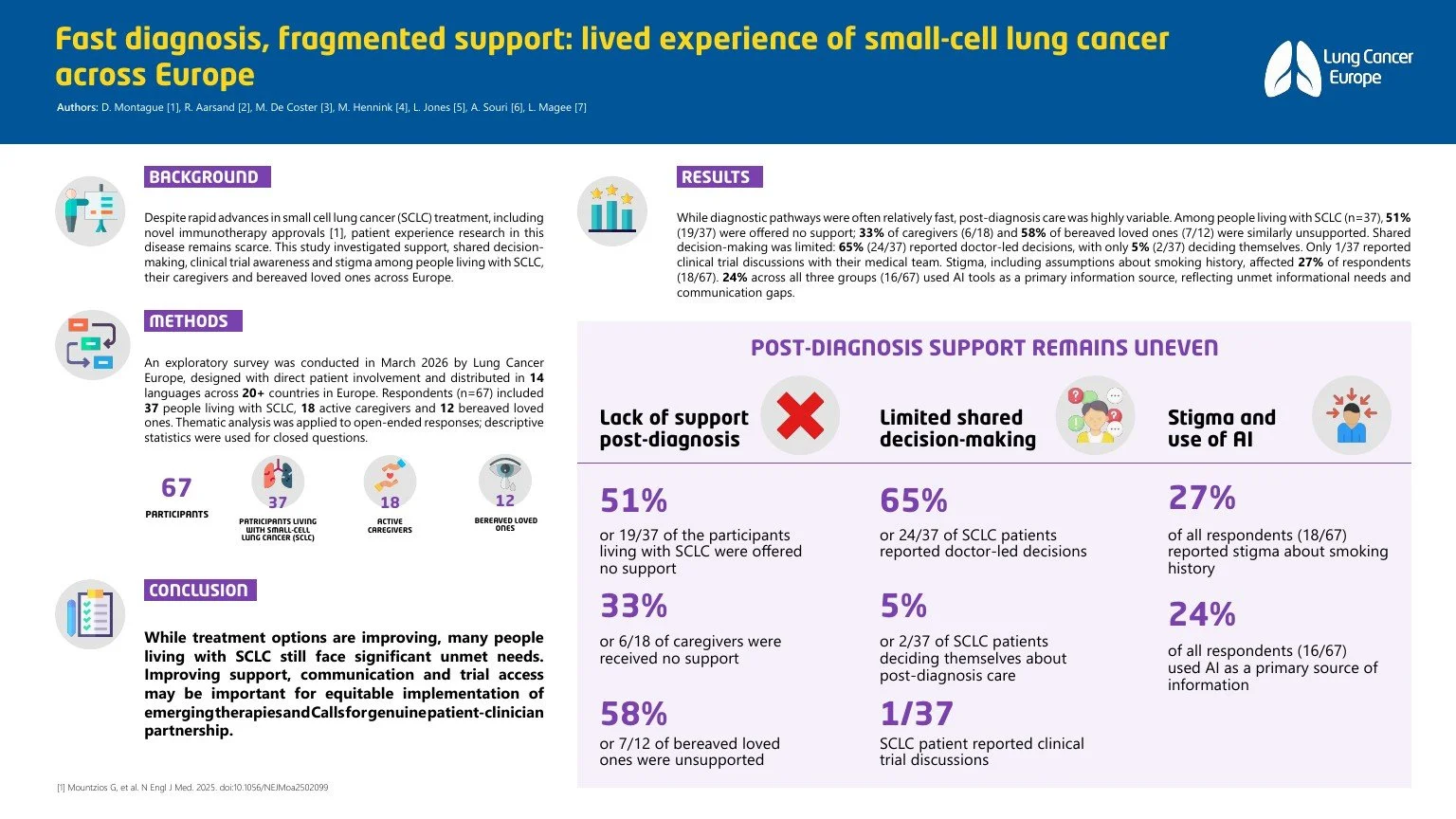
The first abstract, Fast diagnosis, fragmented support: lived experience of small-cell lung cancer across Europe, reports findings from an exploratory European survey covering support, involvement in treatment decisions, clinical trial discussions, stigma and information seeking.
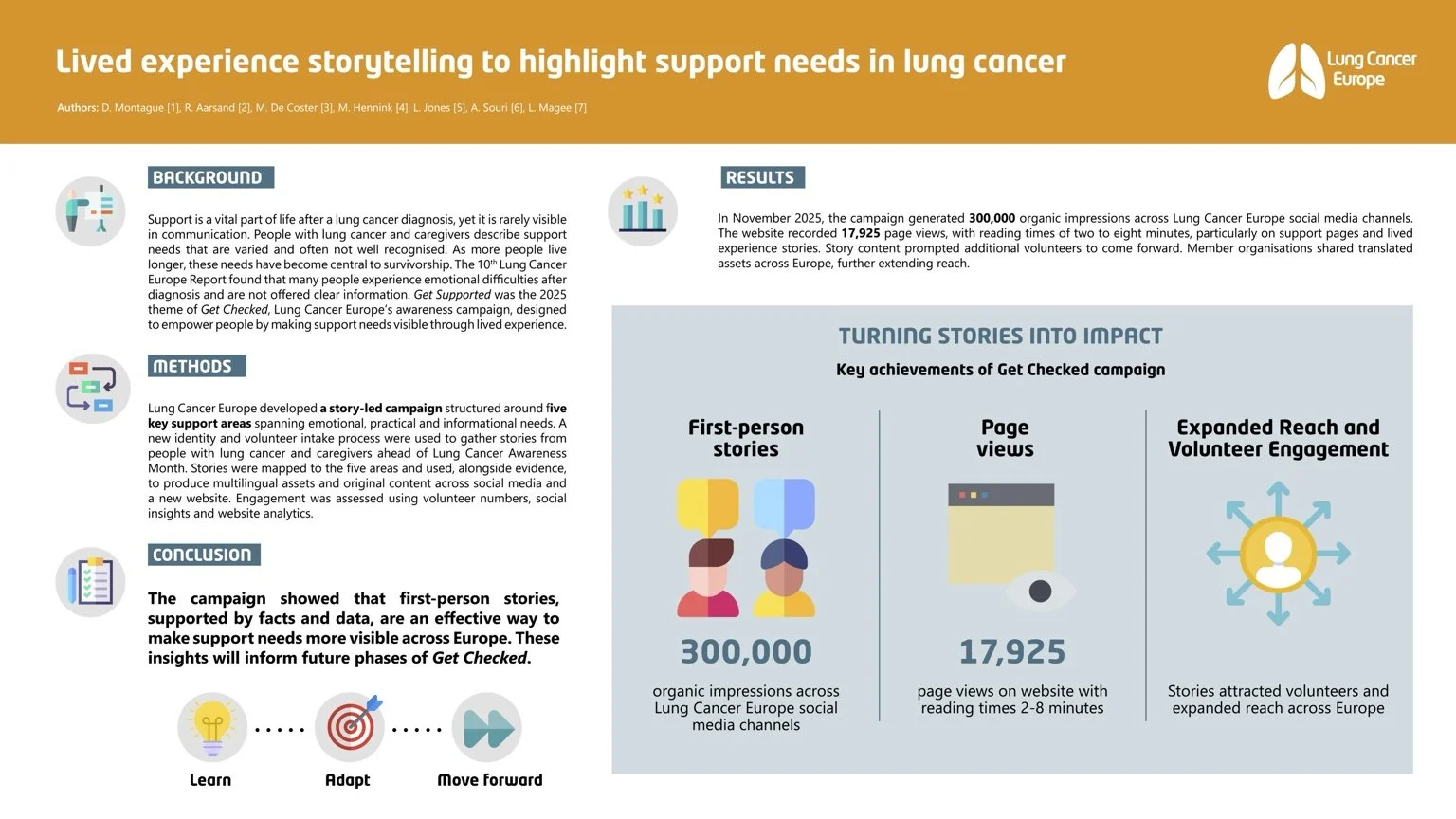
The second abstract, Lived experience storytelling to highlight support needs in lung cancer, evaluates Lung Cancer Europe’s 2025 Get Supported campaign.
It examines how first-person experiences were combined with evidence to communicate emotional, practical and information needs.
European SCLC survey examines life after diagnosis
Small-cell lung cancer can progress quickly. Diagnosis and treatment decisions often need to happen within a short period.
Despite changes in SCLC treatment, there is still limited research into what people living with the disease and those close to them experience.
Lung Cancer Europe carried out an exploratory survey in March 2026. People with direct experience of SCLC helped design it. The survey was available in 14 languages and distributed across more than 20 European countries.
There were 67 respondents:
37 people living with SCLC
18 caregivers
12 bereaved loved ones
Participants often described relatively fast diagnostic pathways. Their experiences after diagnosis varied much more.
Among the people living with SCLC, 19 of 37 said they had been offered no support. The same was reported by 6 of 18 caregivers and 7 of 12 bereaved loved ones.
SCLC treatment decisions and clinical trial discussions
The survey also asked how decisions about care were made.
Twenty-four of the 37 people living with SCLC said decisions were led by their doctor. Two said they made decisions themselves.
Only one person out of 37 said clinical trials had been discussed with them by their medical team.
This is particularly important as SCLC treatment develops. People need clear information about the options and clinical trials that may be relevant to them. They also need a genuine opportunity to take part in decisions about their care.
Lung cancer stigma and the search for information
Eighteen of the 67 respondents said they had experienced stigma, including assumptions about their smoking history.
Sixteen respondents said they had used artificial intelligence tools as a main source of information.
The survey cannot tell us why they chose these tools or what information they received. It does raise questions about whether people affected by SCLC can find the clear, reliable and current information they need elsewhere.
This was a small exploratory survey. The results cannot tell us how common these experiences are among everyone affected by SCLC in Europe. They identify gaps and questions that need closer examination.
Using first-person stories in lung cancer communication
The second abstract looks at lived experience in a different context.
Lung Cancer Europe’s 2025 Get Supported campaign focused on emotional, practical and information needs after a lung cancer diagnosis. It was informed by findings from the 10th Lung Cancer Europe Report and organised around five areas of support.
People living with lung cancer and caregivers shared their experiences before Lung Cancer Awareness Month. Their stories were connected to the five support areas and used alongside evidence.
The campaign included original website content and multilingual social media resources. Lung Cancer Europe member organisations also shared translated materials across Europe.
Get Supported campaign reach across Europe
During November 2025, Get Supported generated:
300,000 organic impressions across Lung Cancer Europe’s social media channels
17,925 website page views
Reading times of between two and eight minutes, particularly on support pages and first-person stories
More people volunteered to share their experiences after seeing the campaign.
These results measure communication and engagement. They do not show that the campaign changed care or access to support.
They show that people spent time with the content, that member organisations helped it travel across Europe and that others responded by offering their own experiences.
Lived experience as evidence and communication
The two abstracts do not investigate the same issue.
The SCLC survey uses lived experience to identify gaps in care, communication and information. The Get Supported abstract examines how lived experience can be communicated responsibly alongside wider evidence.
In both, people affected by lung cancer are part of the work itself.
Their experiences help define the questions, identify what is missing and explain the realities behind the data. One person’s story cannot represent everyone, but it can show what a finding means in everyday life.
Lung cancer advocacy across ERS Congress 2026
Lung Cancer Europe’s work at ERS extends beyond the two abstracts.
President Debra Montague is presenting findings from the European SCLC survey and abstract and contributing to European Lung Health Group discussions on prevention, early detection, access and care.
New Funding and Projects Expert Rebekka Aarsand is presenting the abstract on lived experience storytelling and the Get Supported campaign.
On Wednesday, Vice President Angeliki Souri will join the ERS studio session Invisible Burdens: the stigma of lung conditions as a panellist.
The session looks beyond the physical effects of respiratory conditions to experiences that are less often recognised or discussed.
This has clear relevance to lung cancer. In the SCLC survey, 18 of the 67 respondents said they had experienced stigma, including assumptions about their smoking history.
Angeliki’s involvement provides an opportunity to bring the lung cancer perspective into a wider discussion about stigma across respiratory conditions.
Across these different parts of the congress, the focus remains on the people behind the evidence: what they experience, what can be overlooked and what needs to change.
Editors additions 9th September 2026:
What came out of ERS Congress 2026
Since this article was first published, ERS Congress 2026 has drawn to a close.
Alongside presenting our two abstracts and contributing to the session on stigma, Lung Cancer Europe took part in discussions about pulmonary rehabilitation, screening, research and the involvement of people affected by lung cancer.
Several of those discussions have already led to practical outcomes and plans for further work.
Pulmonary rehabilitation for all people with lung cancer
President Debra Montague has been invited to join the new ERS Pulmonary Rehabilitation Guideline Steering Committee.
During the initial discussions, Debra raised concerns that the proposed scope focused on people with lung cancer who had undergone surgery.
The scope was subsequently expanded to include all people with lung cancer, including those who have not had surgery.
This is particularly relevant to people living with advanced or metastatic lung cancer. They may experience breathlessness, fatigue, reduced physical function and other symptoms that could potentially benefit from pulmonary rehabilitation, but they have often been less visible in research and clinical practice in this area.
Lung Cancer Europe will now recruit people living with lung cancer, with and without previous experience of pulmonary rehabilitation, to contribute to the development of the guideline.
Representing people affected by lung cancer at ERS
Lung Cancer Europe’s involvement began with the ERS Patient Networking Day.
Debra chaired the morning programme, which brought together seven speakers, and presented a summary of the main discussions and outputs during the afternoon.
Rebekka Aarsand also attended sessions covering screening, patient empowerment, tobacco and vaping, and the involvement of people affected by health conditions in research.
Lung Cancer Europe’s work through SOLACE+ formed part of discussions with the European Lung Foundation and others about the contribution advocacy organisations can make to European respiratory research and policy.
Lung cancer screening and earlier detection
Lung cancer screening and earlier detection featured strongly throughout the Congress.
The team heard discussions about more personalised approaches to managing nodules detected through screening. This included a session from radiologist Professor Annemiek Snoeckx examining how individual risk could help determine which findings require further investigation.
The discussions addressed an important challenge: detecting lung cancer as early as possible while reducing unnecessary investigations, overdiagnosis and overtreatment.
New relationships and next steps after ERS 2026
ERS also provided opportunities to develop relationships with people working across respiratory health, research and policy.
Vice President Angeliki Souri and Rebekka met José Luis Castro, WHO Director-General’s Special Envoy for Chronic Respiratory Diseases. A further meeting is planned during the World Conference on Lung Cancer.
Debra met Professor Ingeborg Farver-Vestergaard, who expressed an interest in Lung Cancer Europe’s work on mental health. A follow-up meeting has been requested to discuss our Mental Health reports and possible future work.
She also met Professor Sooronbaev, Chief Pulmonologist at the Ministry of Health in Kazakhstan. Further discussions are planned about lung cancer and respiratory care priorities in Kazakhstan.
Other conversations during the Congress covered lung cancer screening, research, policy and possible future partnerships. Several have already resulted in plans for follow-up meetings.
Lung Cancer Europe leaves Barcelona with new relationships to develop, two abstracts presented and a role in the development of important new guidance on pulmonary rehabilitation.
Thank you to the European Respiratory Society and to everyone who met with us, visited our posters or shared their work and ideas during the Congress.
More from Lung Cancer Europe
Fast diagnosis, fragmented support: lived experience of small-cell lung cancer across Europe - REPORT COMING SOONRead the 10th Lung Cancer Europe ReportExplore Get Checked