
New Treatments for Small Cell Lung Cancer in Europe
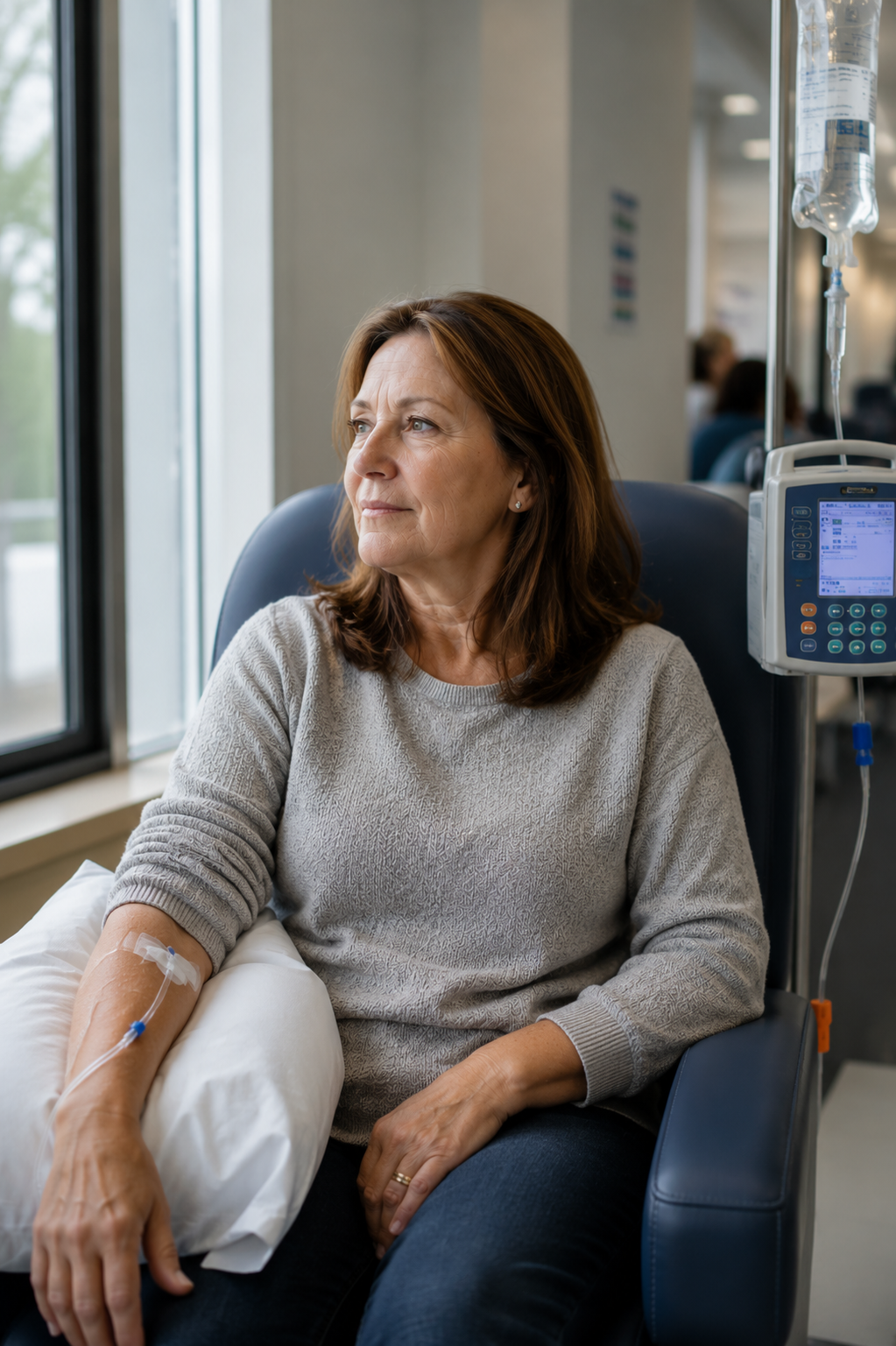
The European Union has published two Joint Clinical Assessments for medicines used in extensive-stage small cell lung cancer (SCLC): tarlatamab, for disease that has come back after chemotherapy, and lurbinectedin, used as a maintenance treatment. These are shared European reviews of how well the medicines work and how safe they are. They are an encouraging sign of movement in a cancer that has seen little change for decades. They are not, however, the same as a decision to fund a medicine, which each country still makes for itself.
This article explains what the two assessments found, what a Joint Clinical Assessment is, and what these developments mean for people living with SCLC and their caregivers across Europe.
What has changed for small cell lung cancer in Europe?
Small cell lung cancer is diagnosed in around 62,000 people in Europe each year. It is one of the most aggressive forms of lung cancer. It often grows quickly, is frequently found at an advanced, extensive stage, and tends to come back after initial treatment.
For decades, the treatment options changed very little. That is now beginning to shift. Two new medicines for extensive-stage SCLC have been through a shared European clinical assessment, one used after the cancer relapses and one used as maintenance treatment. Small cell lung cancer is a key focus for Lung Cancer Europe in 2026, and these assessments are part of a wider picture of a disease that is, at last, receiving more attention.
What is a Joint Clinical Assessment, and why does it matter for access?
Under new European Union rules that began to apply in January 2025, most new cancer medicines are now assessed once, together, at European level. This shared review is called a Joint Clinical Assessment. Instead of every country repeating the same clinical analysis, experts from member states look at the evidence together and produce a single report on how well a medicine works and how safe it is compared with existing options.
The aim is to reduce duplication and give every country the same starting point of high-quality evidence. This should help national decisions happen more consistently and, in time, more quickly.
One point matters greatly for anyone waiting for a new treatment. A Joint Clinical Assessment does not set a price and does not decide whether a medicine will be paid for. Those decisions remain entirely national. Each country still makes its own choice about reimbursement through its own health system.
The key point: assessment is not access. A shared European assessment is an important step, but whether a medicine actually reaches people still depends on decisions taken in each country.
Tarlatamab: a new option after relapse
Tarlatamab is a type of immunotherapy known as a bispecific T-cell engager. It works by bringing the immune system's T-cells into direct contact with cancer cells that carry a protein called DLL3, helping the immune system find and attack the tumour. It was approved by the European Commission in 2026 for adults with extensive-stage SCLC whose disease has progressed on or after first-line platinum-based chemotherapy.
The assessment reviewed tarlatamab mainly against topotecan, a chemotherapy long used after relapse. Across the different groups of people whose disease had come back, tarlatamab showed a consistent survival benefit compared with topotecan, higher response rates, and, notably, fewer severe side effects than chemotherapy. Compared with topotecan:
In platinum-resistant disease, median overall survival was 11.1 months with tarlatamab versus 5.8 months with topotecan. Response rates were 30.6% versus 6.2%, and severe side effects (grade 3 or higher) were less common with tarlatamab, at 59.5% versus 84.4%.
In platinum-sensitive disease, median overall survival was 13.9 versus 11.4 months. Response rates were 35.1% versus 26.0%, a difference that was not statistically significant, and severe side effects were again lower with tarlatamab, at 41.4% versus 82.8%.
Where disease recurred within six months, or where platinum could not be used again, median overall survival was 11.2 versus 6.4 months, and response rates were 31.8% versus 14.8%.
The assessment also looked at indirect comparisons with other chemotherapy regimens, but these carried more uncertainty and did not all point the same way.
One practical point is relevant to access. Tarlatamab can cause a reaction called cytokine release syndrome, so it needs to be given in centres set up to monitor for it. This makes it all the more important that access is planned so that people are not disadvantaged by where they live or which centre they attend.
Lurbinectedin: a new maintenance approach
Lurbinectedin is given by infusion and is described as a selective inhibitor of the transcription processes that tumours rely on. The assessment looked at lurbinectedin combined with atezolizumab as a maintenance treatment for adults with extensive-stage SCLC whose disease had not progressed after first-line induction treatment with atezolizumab, carboplatin and etoposide.
The evidence here is more mixed, and it is worth being clear about it. From the IMforte trial, comparing lurbinectedin plus atezolizumab with atezolizumab alone as maintenance:
Time before the cancer progressed was longer with the combination: 5.55 months compared with 2.73 months. This was a clear improvement.
Overall survival was 13.90 months compared with 11.14 months. However, this survival difference was statistically significant at an earlier analysis and was no longer statistically significant at the later, more complete analysis.
Side effects were more common with the combination. A side effect of any kind was reported in 97.1% of people receiving the combination, compared with 81.7% receiving atezolizumab alone, with some disadvantages for quality of life.
In plain terms, lurbinectedin plus atezolizumab may delay progression of the cancer, but this has to be weighed against more side effects and a survival benefit that was not confirmed at the more mature analysis. The assessment also noted that the trial did not include people with poorer performance status or with brain metastases at the outset, so it does not answer every question.
What does this mean for people living with SCLC and their caregivers?
The overall picture is that the SCLC treatment landscape is beginning to change, but the evidence is not simple, and neither medicine is automatically the right choice for everyone. Whether a particular treatment is suitable is a decision for each person together with their clinical team.
There is also the question of access. A shared European assessment now exists for both medicines, but that does not mean they are available everywhere. Whether and when a treatment reaches people depends on decisions in each country. The concern is that access ends up depending on where someone lives rather than what they need.
What is Lung Cancer Europe doing?
Lung Cancer Europe worked to make sure the patient and caregiver voice was part of this process. A caregiver connected to Lung Cancer Europe contributed written input into the assessment of lurbinectedin, so lived experience helped shape how the evidence was considered, not only the clinical data.
With small cell lung cancer a central focus for Lung Cancer Europe in 2026, our message to decision-makers is straightforward. A shared assessment is progress, but it is not access. We call on member states to turn these assessments into timely and equitable access, so that people living with SCLC across Europe can benefit, wherever they happen to live.
Frequently asked questions
Is tarlatamab available across Europe? Tarlatamab has been approved by the European Commission for adults with relapsed extensive-stage SCLC after platinum-based chemotherapy. Whether it is available in practice depends on the reimbursement decision in each country.
What is the difference between European approval and reimbursement? European approval means a medicine can be sold across the European Union. Reimbursement means a national health system has agreed to pay for it. These are separate steps, and approval does not guarantee that a medicine is funded in a given country.
Does a Joint Clinical Assessment decide whether a medicine is funded? No. A Joint Clinical Assessment reviews the clinical evidence at European level. It does not set prices or decide funding. Those decisions are made nationally.
What is lurbinectedin used for in small cell lung cancer? The assessment looked at lurbinectedin combined with atezolizumab as a maintenance treatment, used after first-line treatment has controlled the cancer, for people with extensive-stage SCLC.
In summary
Two new medicines for extensive-stage small cell lung cancer, tarlatamab and lurbinectedin, have been through a shared European clinical assessment. Tarlatamab showed a consistent survival benefit and fewer severe side effects than chemotherapy in the relapsed setting. Lurbinectedin plus atezolizumab may delay progression as a maintenance treatment, but with more side effects and a survival benefit that was not confirmed at the more mature analysis.
Progress in SCLC is still too slow, but these assessments show that new options are being tested, reviewed and brought into the European conversation. The next step is access. Lung Cancer Europe will keep pressing for these advances to reach people living with SCLC and their caregivers across Europe.
Sources
Joint Clinical Assessment report for tarlatamab (Imdylltra), European Commission, published 8 July 2026: https://health.ec.europa.eu/publications/joint-clinical-assessment-report-tarlatamab-imdylltra_enTarlatamab summary report (PDF), the source of the tarlatamab figures above: https://health.ec.europa.eu/document/download/3d128877-e497-42e8-99e4-7a29f1f73061_en?filename=hta_jca_mp_202417_tarlatamab_summary-report_en.pdfJoint Clinical Assessment report for lurbinectedin (Zepzelca), European Commission, published 8 July 2026: https://health.ec.europa.eu/publications/joint-clinical-assessment-report-lurbinectedin-zepzelca_enLurbinectedin summary report (PDF), the source of the lurbinectedin figures above: https://health.ec.europa.eu/document/download/8ebad6ee-a657-46cf-9fb1-2897c9abba88_en?filename=hta_jca_mp_202416_lurbinectedin_summary_report_en.pdfJoint Clinical Assessments, European Commission (how the process works): https://health.ec.europa.eu/health-technology-assessment/implementation-regulation-health-technology-assessment/joint-clinical-assessments_enHealth Technology Assessment Regulation, overview, European Commission: https://health.ec.europa.eu/health-technology-assessment/overview_en
Further reading
EMA recommends tarlatamab for relapsed extensive-stage small cell lung cancer, Lung Cancer Europe: https://lungcancereurope.eu/news/ema-recommends-tarlatamab-for-relapsed-extensive-stage-small-cell-lung-cancerSmall cell lung cancer and mental health, Lung Cancer Europe: https://lungcancereurope.eu/news/small-cell-lung-cancer-and-mental-health