
9 takeaways for the lung cancer community from the WHO's new cancer report
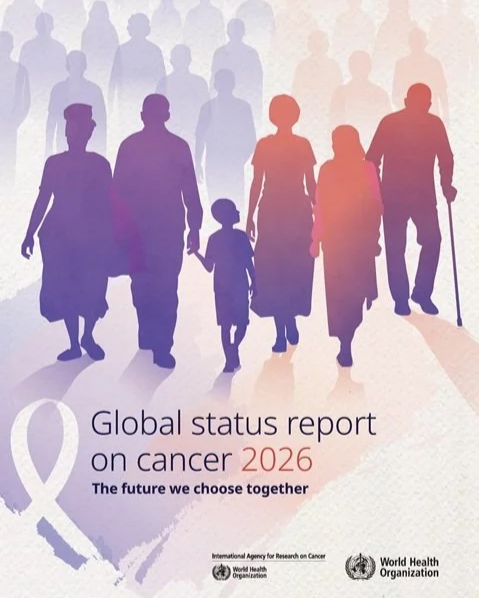
The World Health Organization (WHO) has published its Global Status Report on Cancer 2026, looking at how countries are preventing, diagnosing and treating cancer, where progress has been made and where significant gaps remain.
For people affected by lung cancer, the report contains a number of findings that are particularly relevant.
1. Lung cancer remains the leading cause of cancer death
Lung cancer continues to cause more deaths than any other cancer worldwide.
It remains one of the most common cancers diagnosed in both men and women and is responsible for more cancer deaths than breast, colorectal or prostate cancer.
Reducing that burden will require continued investment in prevention, earlier diagnosis, effective treatment and supportive care.
2. Access to lung cancer surgery is still unequal
For many people diagnosed with early-stage lung cancer, surgery offers the best chance of cure.
The report shows that access to lung cancer surgery remains uneven. In low-, lower-middle- and upper-middle-income countries, lung cancer surgery is included in public health benefit packages less often than surgery for breast or cervical cancer.
This highlights the importance of strengthening cancer services so that people can access potentially curative treatment when they need it.
3. Lung cancer screening is the least available of all
Screening can find lung cancer earlier, when treatment is more effective. Yet the report finds that lung and colorectal cancer screening have the lowest levels of implementation of any cancer worldwide. Where lung screening exists, it typically reaches only people at high risk, through low-dose CT scans, and largely in higher-income settings. Closing this gap, including the uneven picture across Europe, is one of the clearest opportunities to improve lung cancer outcomes.
4. Finding lung cancer late costs lives
Too many lung cancers are still found late. The report shows that when cancer is picked up through emergency presentation rather than diagnosis in primary care, the outlook is far worse, with an excess mortality ratio of 4.0 for lung cancer. Earlier diagnosis is linked to both lower treatment costs and better survival, which makes faster referral and diagnostic pathways central to improving outcomes for people affected by lung cancer.
5. Europe continues to carry a disproportionate cancer burden
Europe is home to around 9% of the world's population, but accounts for around 21% of global cancer cases and 20% of cancer deaths.
These figures underline why continued investment in cancer prevention, diagnosis and treatment remains a priority across Europe.
6. Lung cancer prevention is about more than smoking
The report recognises the progress made in reducing tobacco use, with smoking rates continuing to fall in many parts of the world.
It also highlights air pollution as an important carcinogen. Fine particulate air pollution (PM2.5) increases the risk of lung cancer, while climate change is expected to increase exposure through more frequent wildfires and other environmental changes.
Preventing lung cancer means addressing a range of risk factors, not smoking alone.
7. Too many people still cannot access the care they need
The report identifies persistent inequalities in access to prevention, diagnosis, treatment and supportive care.
It also notes that fewer than one in three countries currently include cancer care within universal health coverage packages.
Scientific advances have transformed cancer care in recent years, but access remains highly variable between countries.
8. Mental health and financial wellbeing cannot be overlooked
The WHO carried out its first global survey of people affected by cancer.
It found that at least 45% experienced financial hardship, more than half reported mental health challenges, and almost all caregivers described significant strain.
These findings reflect the wider impact of cancer on individuals and families beyond diagnosis and treatment.
9. Cancer control needs strong health systems as well as innovation
The report calls for continued investment in research and innovation, but also in the health systems needed to deliver prevention, diagnosis, treatment, rehabilitation, palliative care and long-term support.
There is real progress to build on: the report credits immunotherapy with lifting five-year survival in advanced non-small cell lung cancer from around 5% to 10% before 2015, up to 20% to 30% today, showing what timely access to modern treatment can deliver.
It also recommends placing people affected by cancer at the centre of cancer policy and decision-making.
Looking ahead
The WHO report shows that progress against cancer continues, but it is not being experienced equally.
For the lung cancer community, improving outcomes depends on more than developing new treatments. It also depends on reducing inequalities, improving access to screening and diagnosis, ensuring timely treatment, supporting quality of life and listening to the experiences of people affected by lung cancer.
Sources
World Health Organization – Global Status Report on Cancer 2026: The Future We Choose Together (full report).WHO and IARC press release: WHO calls for urgent action as new cancer cases are projected to nearly double by 2050
Further reading
Hotter Summers, Dirtier Air: Heatwaves and Lung Cancer in Europe – How climate change and air pollution are becoming increasingly important in lung cancer prevention.Air Pollution and Lung Cancer in Europe: What the Evidence Now Shows – A closer look at the latest evidence linking air pollution and lung cancer.Could Ageing Lung Cells Increase Lung Cancer Risk? – New research into how ageing may contribute to the development of lung cancer.Lung Cancer and Heart Health: Understanding the Two-Way Connection – Why cardiovascular health matters for people affected by lung cancer.11th Lung Cancer Europe Report: Lung Cancer and Mental Health – Findings from more than 2,200 people affected by lung cancer across Europe, exploring the impact of lung cancer on mental health.