
Wildfire smoke and lung cancer: what does the evidence show?
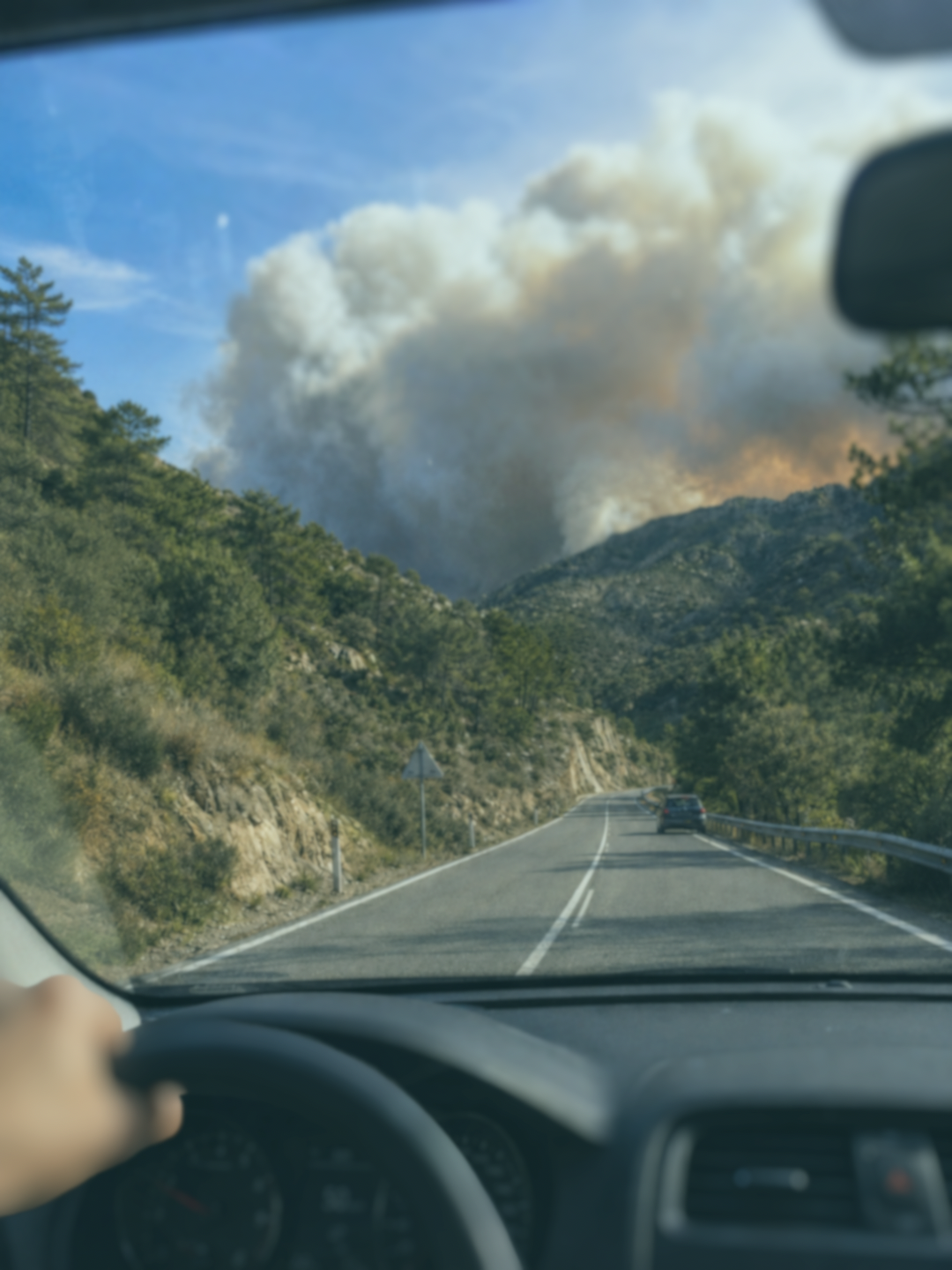
Across France and Spain, firefighters are battling major wildfires during another period of extreme heat and dry conditions. Both countries have called on the EU for emergency support. New World Health Organization data reported by EUobserver shows that the number of wildfires across Europe has increased by 57% since 2022.
This is not only a problem for communities close to the flames. Wildfire smoke can travel hundreds or even thousands of kilometres, affecting air quality far beyond the area that is burning.
This raises important questions for people affected by lung cancer. Could repeated exposure to wildfire smoke increase the risk of developing lung cancer? And what could it mean for people already receiving treatment or recovering from surgery?
What is in wildfire smoke?
Wildfire smoke contains a mixture of gases and very small particles.
The main concern for health is fine particulate matter, known as PM2.5. These particles are much smaller than the width of a human hair. They can travel deep into the lungs and some can enter the bloodstream.
Wildfire smoke may also contain substances known to cause cancer, including polycyclic aromatic hydrocarbons, or PAHs. What is released depends partly on what is burning. Smoke from fires that reach homes, vehicles or industrial areas may contain additional chemicals, metals and particles from plastics and building materials.
Short-term exposure can irritate the eyes, nose and throat and may cause coughing, wheezing or breathlessness. It can also make existing lung and heart conditions worse.
Does air pollution cause lung cancer?
Outdoor air pollution and particulate matter are already recognised causes of lung cancer.
The International Agency for Research on Cancer classified outdoor air pollution and particulate matter as carcinogenic to humans in 2013. Long-term exposure to PM2.5 is also linked to a higher risk of heart and respiratory disease.
Wildfire smoke is one source of PM2.5. However, research looking specifically at wildfire exposure and lung cancer is still relatively new.
The evidence does not show that a brief encounter with wildfire smoke will cause lung cancer. Researchers are mainly concerned about repeated or prolonged exposure, particularly as severe wildfire seasons become more common.
Can wildfire smoke increase the risk of lung cancer?
One of the largest studies so far followed around two million people in Canada for a median of 20 years.
People who had lived within 50 kilometres of a wildfire during the previous ten years had a 4.9% higher relative incidence of lung cancer than people who had not been exposed in this way. Similar results were seen when researchers used a smaller area of 20 kilometres.
This does not mean that someone living near a wildfire has a 4.9% chance of developing lung cancer. It means that the rate of lung cancer was 4.9% higher in the exposed group than in the comparison group.
The study also has limitations. Researchers used the distance between a person’s home and a wildfire as a measure of exposure. They could not establish exactly how much smoke each person had breathed or account for every other possible risk factor.
It therefore shows an association, but it cannot prove that wildfire smoke caused the additional lung cancers.
What does the newest research show?
Research presented at the American Association for Cancer Research Annual Meeting in April 2026 examined data from more than 91,000 people who had taken part in a large US cancer screening trial.
Greater exposure to wildfire smoke was associated with an increased risk of several cancers, including lung cancer. The researchers also reported that the risk generally rose as exposure increased.
These results add to concerns about the possible long-term effects of wildfire smoke. However, they were presented at a scientific conference and have not yet been published as a full peer-reviewed paper.
They should be treated as emerging evidence rather than a final answer.
How can wildfire smoke affect people living with lung cancer?
Wildfire smoke can affect anyone, but some people may be more vulnerable to its effects.
People living with lung cancer may already have breathing difficulties or reduced lung function. Surgery, radiotherapy and some cancer treatments can also affect the lungs.
Smoke may make symptoms such as coughing or breathlessness worse. Wildfires can also lead to evacuation, road closures, power cuts and disruption to healthcare.
Recent studies suggest that these combined effects may influence lung cancer outcomes.
Wildfires during recovery from lung cancer surgery
A study published in JAMA Oncology included 466,912 people who had surgery for stages I to III non-small cell lung cancer.
People exposed to a wildfire in the area where they lived during the first three months after leaving hospital had a 43% higher adjusted risk of death than those who were not exposed. Smaller associations were also seen when exposure happened later during the first year after surgery.
The study does not show that smoke alone caused the difference.
Researchers identified wildfire exposure through fires recorded within each person’s postcode area. Living through a wildfire may also involve stress, evacuation, difficulty reaching appointments and interruptions to care.
The findings suggest that people recovering from lung cancer surgery may need extra support during wildfire emergencies.
Wildfire PM2.5 and lung cancer survival
Research presented at the 2025 American Society of Clinical Oncology Annual Meeting looked more directly at PM2.5 from wildfire smoke.
Researchers studied more than 18,000 people with non-small cell lung cancer in California. They estimated wildfire-related PM2.5 levels around each person’s home during the year after diagnosis.
Higher exposure was associated with a 20% greater risk of dying from lung cancer. Among people with stage IV disease who had never smoked, higher exposure was associated with a 55% greater risk.
These findings are important but need further study. They were reported in a conference abstract and have not yet been confirmed in a full peer-reviewed publication.
Can wildfires disrupt lung cancer treatment?
Wildfires can affect cancer care even when smoke is not the main problem.
A 2025 study examined more than 202,000 people receiving radiotherapy for inoperable stage III non-small cell lung cancer in the United States.
Exposure to a formally declared wildfire disaster during radiotherapy was associated with a small but statistically significant reduction in overall survival.
The study could not identify exactly what caused the difference. Possible explanations include interruptions to radiotherapy, difficulty travelling to treatment, pressure on local healthcare services and the health effects of smoke.
It shows why cancer services need plans to continue treatment and communicate with people affected during wildfires and other extreme weather events.
Protecting your lungs when wildfire smoke affects the air
Smoke may affect air quality even when a fire is some distance away.
When smoke levels are high:
Stay indoors where it is safe to do so and keep doors and windows closed.
Avoid bringing outdoor air inside through ventilation systems.
Reduce other sources of indoor pollution, including smoking, candles, aerosols and frying or grilling food.
Run a portable air cleaner with a HEPA filter when one is available.
Keep outdoor activity to a minimum.
When going outside is unavoidable, a well-fitted FFP2 or N95 mask can help filter out fine particles.
WHO Europe recommends that people at greater risk remain indoors when possible and wear an FFP2 or N95 mask if they need to go outside.
People receiving lung cancer treatment should contact their clinical team if smoke makes their symptoms worse, or if a fire, evacuation or travel disruption could affect an appointment or access to medication.
Anyone experiencing severe breathlessness, chest pain or a medical emergency should seek urgent help.
What do we know about wildfire smoke and lung cancer?
Some parts of the evidence are already clear:
Outdoor air pollution and PM2.5 cause lung cancer. Wildfire smoke is a major source of PM2.5 and can affect the lungs, heart and wider body.
Research specifically examining wildfire smoke and lung cancer remains limited. However, several large studies have found associations with a higher incidence of lung cancer and poorer outcomes among people already diagnosed.
These studies cannot yet tell us how much exposure is harmful, who is most vulnerable or how much of the effect comes directly from smoke rather than disruption caused by the fire.
Most of the existing lung cancer research also comes from Canada and the United States. More European research is needed, including studies that measure smoke exposure directly.
As Europe faces another period of extreme heat and severe wildfires, protecting health cannot stop at the edge of the fire zone. Air-quality warnings, cancer services and emergency planning must take account of people whose lungs and health are already affected.
Sources
Current wildfires in France and Spain
Reuters, France, Spain make headway against huge blazes as new heatwave looms, 28 July 2026.
Outdoor air pollution and particulate matter as causes of cancer
International Agency for Research on Cancer, Outdoor air pollution a leading environmental cause of cancer deaths.Long-term wildfire exposure and new cases of lung cancer
Korsiak J et al., Long-term exposure to wildfires and cancer incidence in Canada: a population-based observational cohort study, The Lancet Planetary Health, 2022.Emerging evidence presented at AACR 2026Further AACR explanation of the 2026 findings
American Association for Cancer Research, Catching the Drift: How Wildfire Smoke Plumes May Increase Cancer Risk, July 2026.Wildfire exposure during recovery from lung cancer surgery
Zhang D et al., Association of Wildfire Exposure While Recovering From Lung Cancer Surgery With Overall Survival, JAMA Oncology, 2023.Wildfire PM2.5 and survival after a lung cancer diagnosis
Singhal S et al., Wildfire-specific fine particulate matter exposure and lung cancer-specific survival, Journal of Clinical Oncology, ASCO Annual Meeting abstract, 2025.Accessible summary of the UC Davis research
UC Davis Health, Wildfire pollution may lower survival of lung cancer patients, May 2025.Wildfire disasters during radiotherapy for lung cancer
Wildfire exposure and survival among patients receiving radiation therapy for non-small cell lung cancer, 2025.WHO advice on protecting health during wildfires
WHO Regional Office for Europe, Public health advice during the wildfires: how to protect your health and keep safe.WHO wildfire and extreme weather information
WHO Regional Office for Europe, Climate crisis and extreme weather.Further reading
Air Pollution and Lung Cancer in Europe: What the Evidence Now ShowsHotter Summers, Dirtier Air: Heatwaves and Lung Cancer in Europe9 Takeaways for the Lung Cancer Community from WHO’s New Cancer ReportLung Cancer Europe Attends ERS Event on Air Pollution and Health Inequalities