
Get Checked 2026
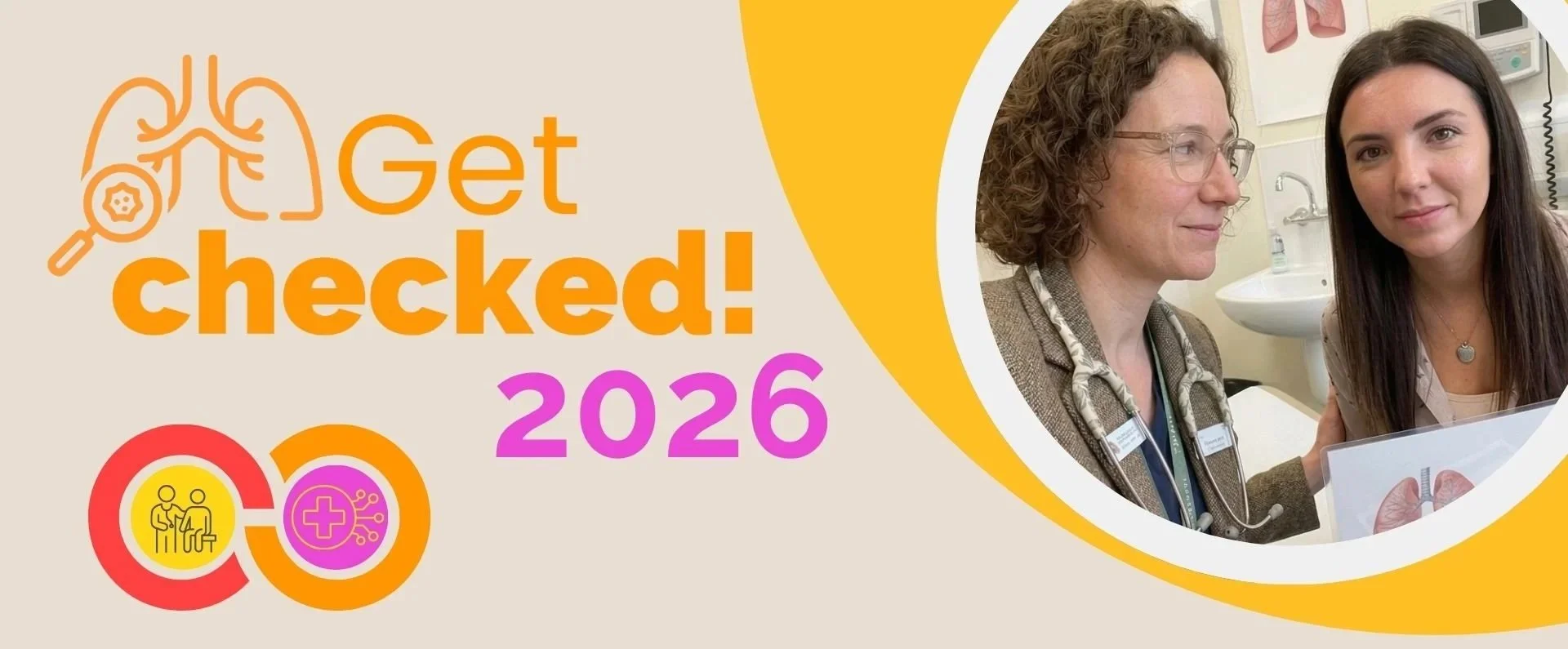
What happens between people and primary care
Our sixth annual campaign looks at the space where symptoms first meet the healthcare system, and why getting through it is harder than it sounds.
Lung cancer doesn't always look how you'd expect. The signs can be vague, easy to miss, or brushed off as something else. A cough that hasn't cleared. Breathlessness on the stairs. Tiredness that could be a hundred things. Most of the time it is a hundred other things, which is exactly what makes this difficult.
Since 2021, Get Checked! has taken a different focus each year. Knowing the symptoms. Understanding diagnosis. Biomarker testing. Challenging myths and stigma. Last year, what support really means after a diagnosis. In 2026 we're turning to the primary care experience, and to the gap between noticing something and getting an answer.
Both sides of the door
This campaign is built around real experience from two groups.
The first is people who have lived with lung cancer symptoms and navigated the path to diagnosis. What the symptoms actually felt like day to day. What made you hesitate before booking an appointment. What that appointment was like, and what happened next.
The second is primary care professionals. GPs, practice nurses, pharmacists, physician associates and others who see these conversations from the other side. What it looks like when someone comes in with something that isn’t yet clear, and what it takes to act on it.
We want to be direct about what this campaign is not. It isn't about educating clinicians, and it isn't about blame in either direction. Primary care teams are working with vague symptoms, short appointments and finite referral capacity. People are working with uncertainty and often a reluctance to make a fuss. Both of those things are real, and neither is a failing. Putting the two accounts side by side tells an honest story about why earlier diagnosis is not straightforward, and what it would take to change that.
Why this is where it starts
For most people affected by lung cancer, primary care is the first point of contact with the health system. It is where a symptom either becomes a referral or becomes something to keep an eye on. Delay at that point carries through to stage at diagnosis, and stage at diagnosis carries through to everything else.
Our own research bears this out, as the piece above sets out: most people who delayed seeking advice did so because they didn’t recognise what they were experiencing.
Two of the eleven commitments in our Charter 2026 to 2030 speak to this directly: timely access to evidence-based screening and early detection, and access to accurate and timely diagnosis. Neither is reachable if people don’t get through the primary care door, or get through it and aren’t referred on.
How to take part
You don't need to be an expert, or to have a particular kind of story. We're interested in honest experience, whatever that looks like for you.
Fill in our short story gathering form. It takes about five minutes and there are no right or wrong answers. Someone from the Get Checked! team will be in touch within two weeks for a brief conversation to find out more. Nothing is published without talking to you first.
Stories may feature on our website, our social media channels, and in campaign materials used by Lung Cancer Europe member organisations across Europe.
For member organisations
The Get Checked! 2026 campaign assets will be launched in our October newsletter (out 1st October) and be available for you to download and share from our Get Checked! website,