
11th Lung Cancer Europe Report
Lung cancer and mental health: A focus on lung cancer type, biomarker group and cross-country comparisons
Published March 2026
The 10th report showed how deeply lung cancer can affect mental health. The 11th report goes further, asking whether that impact differs by type of lung cancer, biomarker status and country.
Lung Cancer Europe’s eleventh report is a further analysis of the survey behind the 10th report, comparing experiences across lung cancer types, biomarker groups and 21 European countries. It was launched on 26 March 2026 at the European Lung Cancer Congress (ELCC) in Copenhagen.
Between 28 May and 6 July 2025, 2,204 people from 31 countries took part in the survey. This included 1,709 people diagnosed with lung cancer and 495 people caring for someone with the disease.
2,204 people
took part in the survey
21 countries
compared in the cross-country analysis
31% people
on average, received no mental health support at any point in their care
The survey ran from 28 May to 6 July 2025 and was available in 19 languages. The 11th report analyses the same survey data as the 10th report.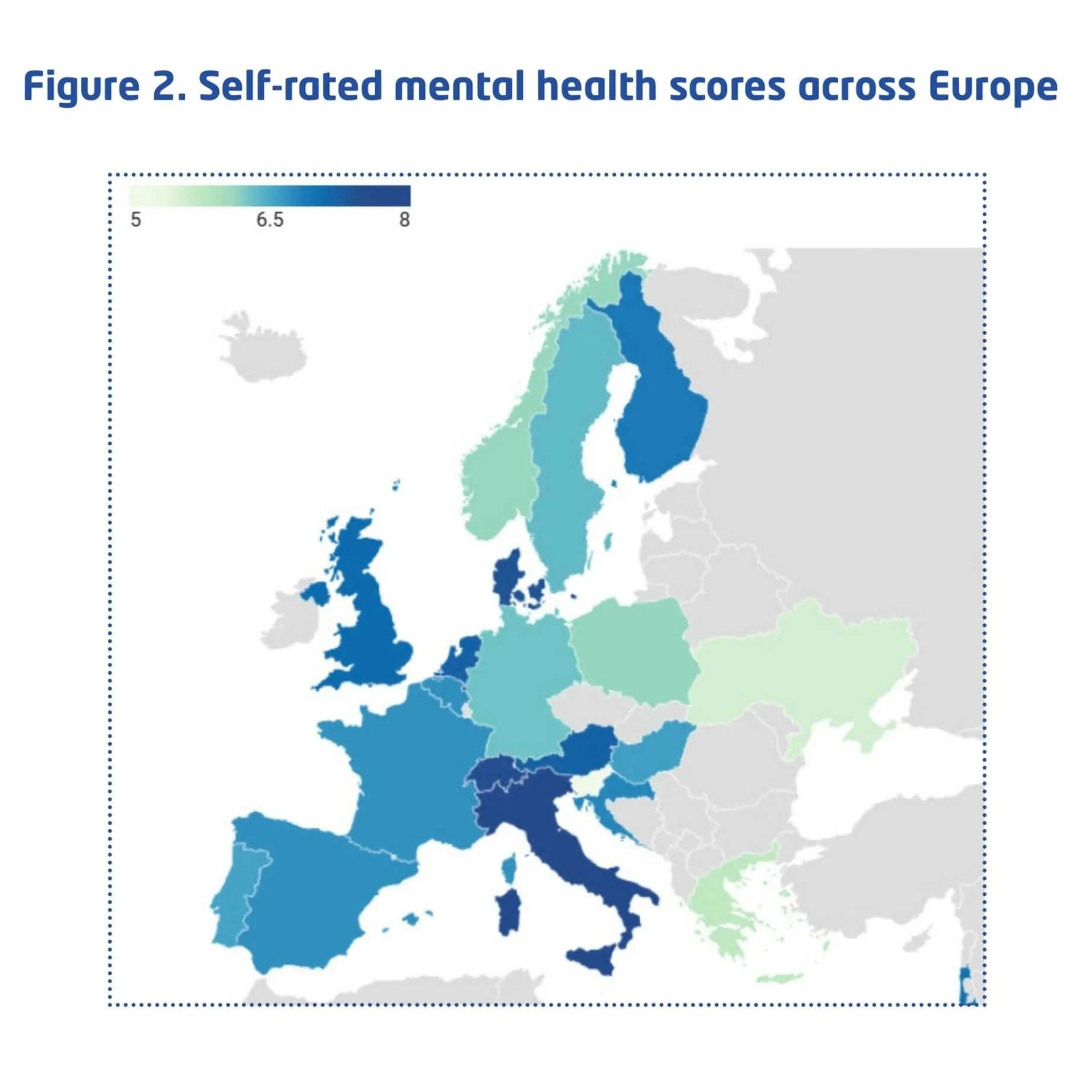
What the report looked at
Lung cancer type How mental health experiences differed between small cell lung cancer (SCLC) and the different types of non-small cell lung cancer (NSCLC).
Biomarker group Differences between biomarker groups, and between people who had been tested for biomarkers and those who had not.
Support and referral Whether and when mental health support was offered, and how often healthcare professionals referred people to support organisations.
Differences between countries Self-rated mental health and the perceived impact of lung cancer on mental health across 21 European countries.
“Psychological support should be standard after diagnosis.”
Support was uneven. People affected by SCLC and people who had not been tested for biomarkers were the most likely to receive no mental health support (43.9% and 47.0%), and they were also among the least likely to be referred to support organisations by a healthcare professional.
What Lung Cancer Europe called for
Treat mental health support as a core part of lung cancer care
Build psychosocial support into the whole lung cancer pathway, with routine distress screening, clear referral routes and timely access to psychological care, peer support and crisis support, from diagnosis through to end-of-life care.
Identify distress and communicate clearly
Healthcare professionals should explain diagnosis and treatment options clearly and consistently, make conversations about mental health routine, and signpost people to trusted resources and lung cancer advocacy organisations, so no one faces the psychological impact of lung cancer alone.
Small cell lung cancer and mental health
Alongside the main report, Lung Cancer Europe has published an edition of the 11th report focused on small cell lung cancer (SCLC). It looks at the 140 people affected by SCLC who took part in the 2025 survey, including people living with SCLC and those caring for them, and compares their experiences with those of all participants.
People affected by SCLC reported a heavier emotional burden and less support. 59% were not offered any mental health support, and 74.3% received no information from their healthcare team about support organisations. Just over half (51.4%) did not feel well equipped to manage the emotional impact of lung cancer, compared with 44.5% of all participants.
The report calls for psychological support to be offered proactively at every stage of SCLC care, alongside clear information on the disease, treatment and care options.
Mental health across lung cancer types and countries
Lung cancer and mental health: A focus on lung cancer type, biomarker group and cross-country comparisons showed that the emotional impact of lung cancer, and the support people receive, varies by diagnosis and by country.
Published in 2026, the report called for mental health support to be treated as a fundamental part of lung cancer care, wherever people live and whatever type of lung cancer they have.
Lung Cancer and Mental Health / Lung Cancer Europe 11th Annual Report