
9th Lung Cancer Europe Report
Empowering voices: knowledge and decision-making among people impacted by lung cancer in Europe
Published November 2024
Knowing the risks, recognising symptoms and understanding the options available all affect how people take part in decisions about their care. When information is missing or hard to follow, people can be left out of choices about their own treatment.
Lung Cancer Europe’s ninth report examined what people affected by lung cancer know about the disease, how they find and use information, and how involved they feel in decisions about their treatment and care.
Between 24 May and 7 July 2024, 2,040 people from 34 countries took part in the survey. This included 1,432 people diagnosed with lung cancer and 608 people caring for someone with the disease.
2,040 people
took part in the survey
34 countries
represented across Europe
55.3% of people
with lung cancer did not know they were at risk before diagnosis
The survey ran from 24 May to 7 July 2024 and was available in 20 languages.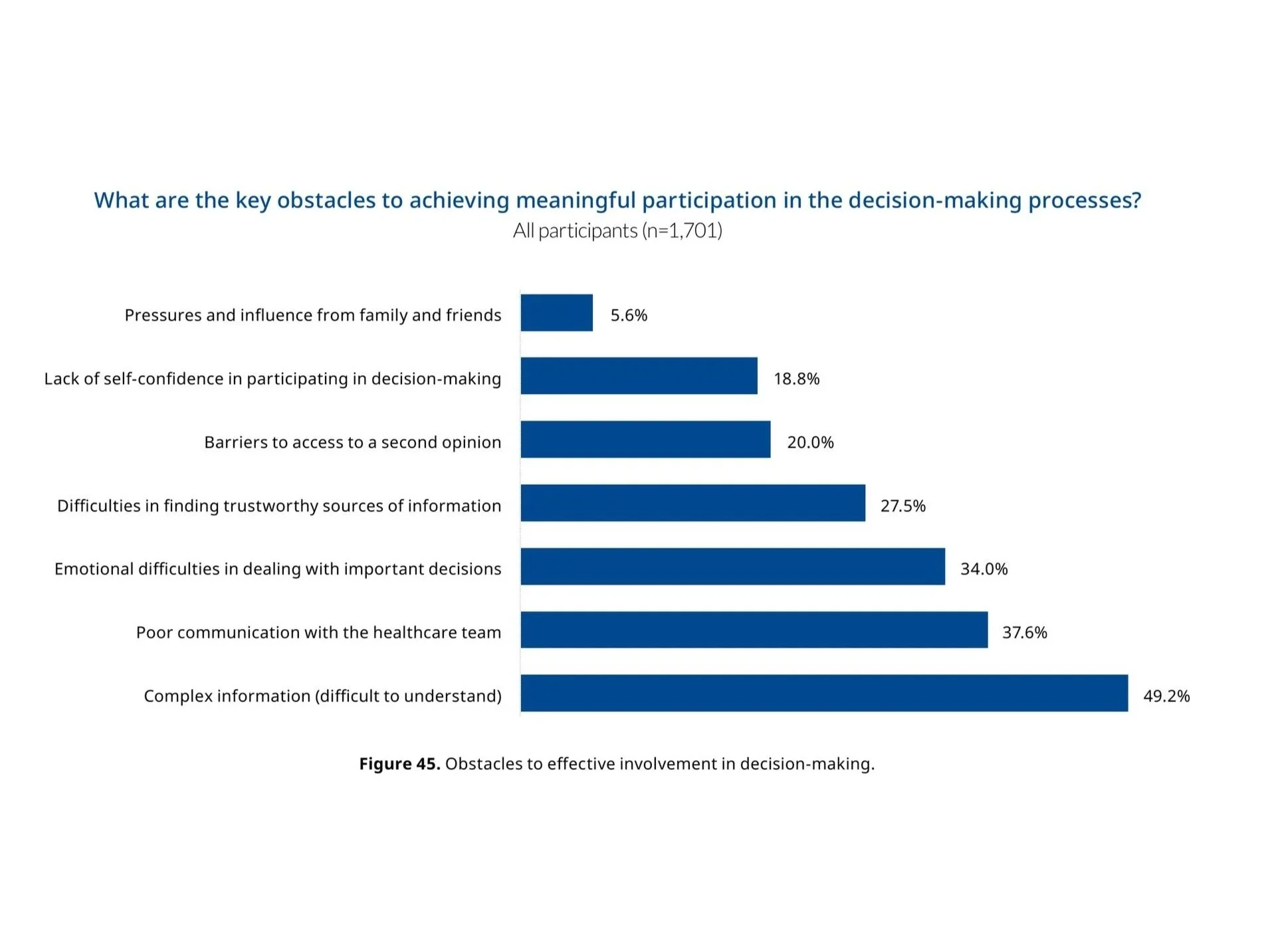
What the report looked at
Knowledge of risk and early detection
Awareness of risk factors beyond smoking, recognition of symptoms, delays in seeking medical advice and understanding of lung cancer screening.
Understanding the diagnosis and treatment options
Knowledge of lung cancer type, stage, biomarkers and prognosis, and familiarity with clinical trials, treatment options and palliative care.
Access to information
Information along the diagnostic pathway, informed consent, the barriers people meet when trying to understand their diagnosis and where they look for information outside the healthcare system.
Shared decision-making
How involved people feel in treatment decisions, whether their preferences are reflected in their care plan, and what stands in the way of meaningful participation.
“We need to be recognised as true
partners in care and decision-making”
Almost everyone wanted a say in their care. 98.0% of people diagnosed with lung cancer believed their views should be considered in treatment decisions, yet only 49.3% reported being highly involved. Complex information (49.2%) and poor communication with the healthcare team (37.6%) were named as the main obstacles.
What Lung Cancer Europe called for
Raise awareness of risk, symptoms and screening
Anyone with lungs can develop lung cancer. Public awareness should cover risk factors beyond smoking, such as radon, asbestos and air pollution, alongside the symptoms of lung cancer and the purpose of screening, so more people seek medical advice early.
Make shared decision-making standard practice
Give people complete, clear information about their diagnosis and all available treatment options, allow enough consultation time for questions, and make the right to a second opinion accessible in every European country.
Knowledge and decision-making in lung cancer
Empowering voices: Knowledge and decision-making among people impacted by lung cancer in Europe showed how gaps in knowledge and information can leave people out of decisions about their own treatment and care.
Published in 2024, the report called for greater public awareness of lung cancer and for people affected by the disease to be treated as partners in decisions about their care.
The Financial Impact of Lung Cancer
Lung Cancer Europe 9th Annual Report