
Lung Cancer Europe is at the IASLC 2026 World Conference on Lung Cancer in Seoul from 12 to 15 September.
We are presenting work on mental health and lung cancer, while also contributing to wider discussions about diagnosis, innovation, access and equity.
Lung cancer and mental health across Europe
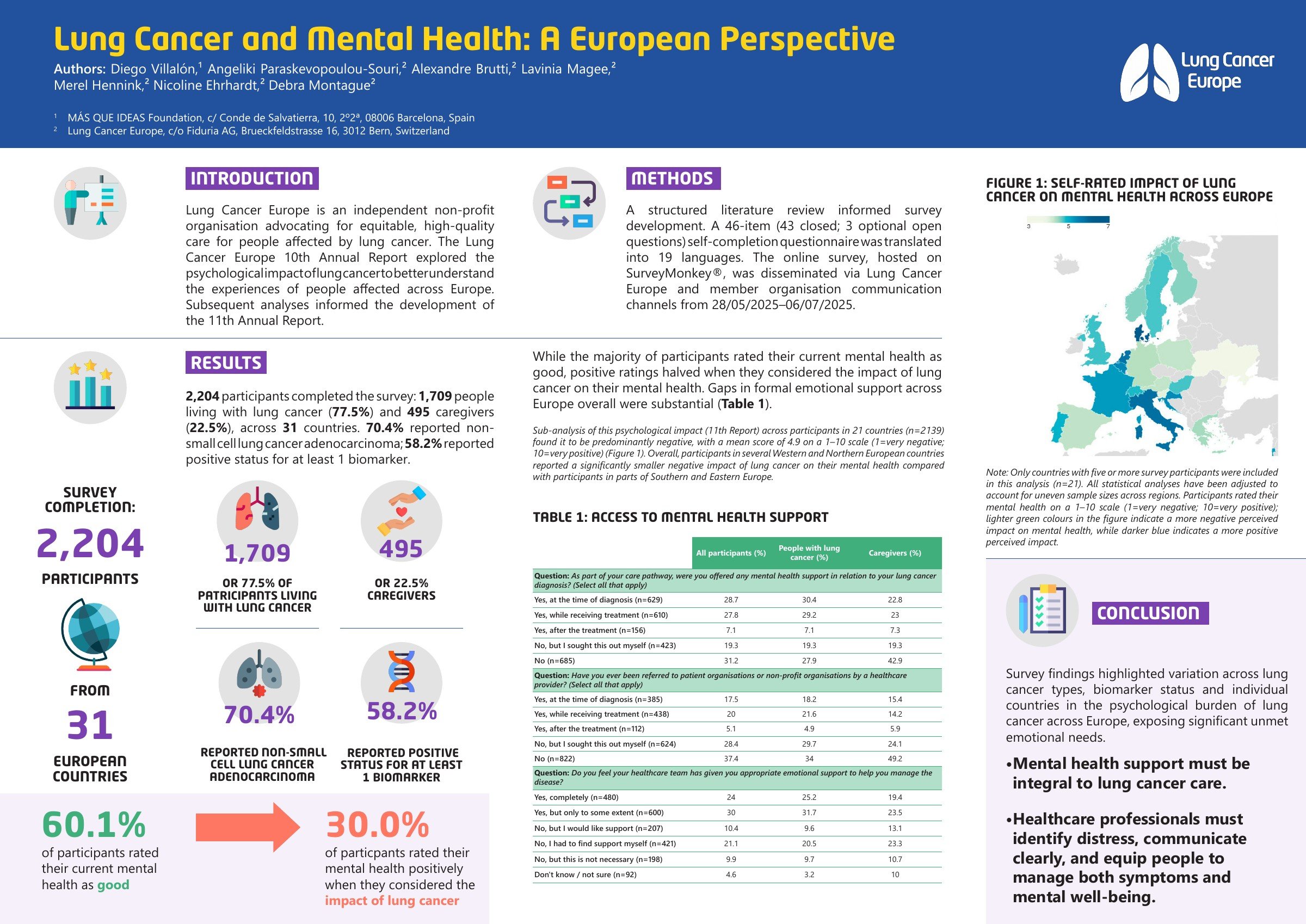
President Debra Montague will present Lung Cancer and Mental Health: A European Perspective.
The abstract draws on findings from the 10th Lung Cancer Europe Report, which included 2,204 people affected by lung cancer across 31 European countries.
The research found substantial gaps in access to emotional and mental health support. It also showed that the psychological impact of lung cancer varies across countries, lung cancer types and individual circumstances.
The poster calls for mental health support to become an integral part of lung cancer care.
Small cell lung cancer and mental health
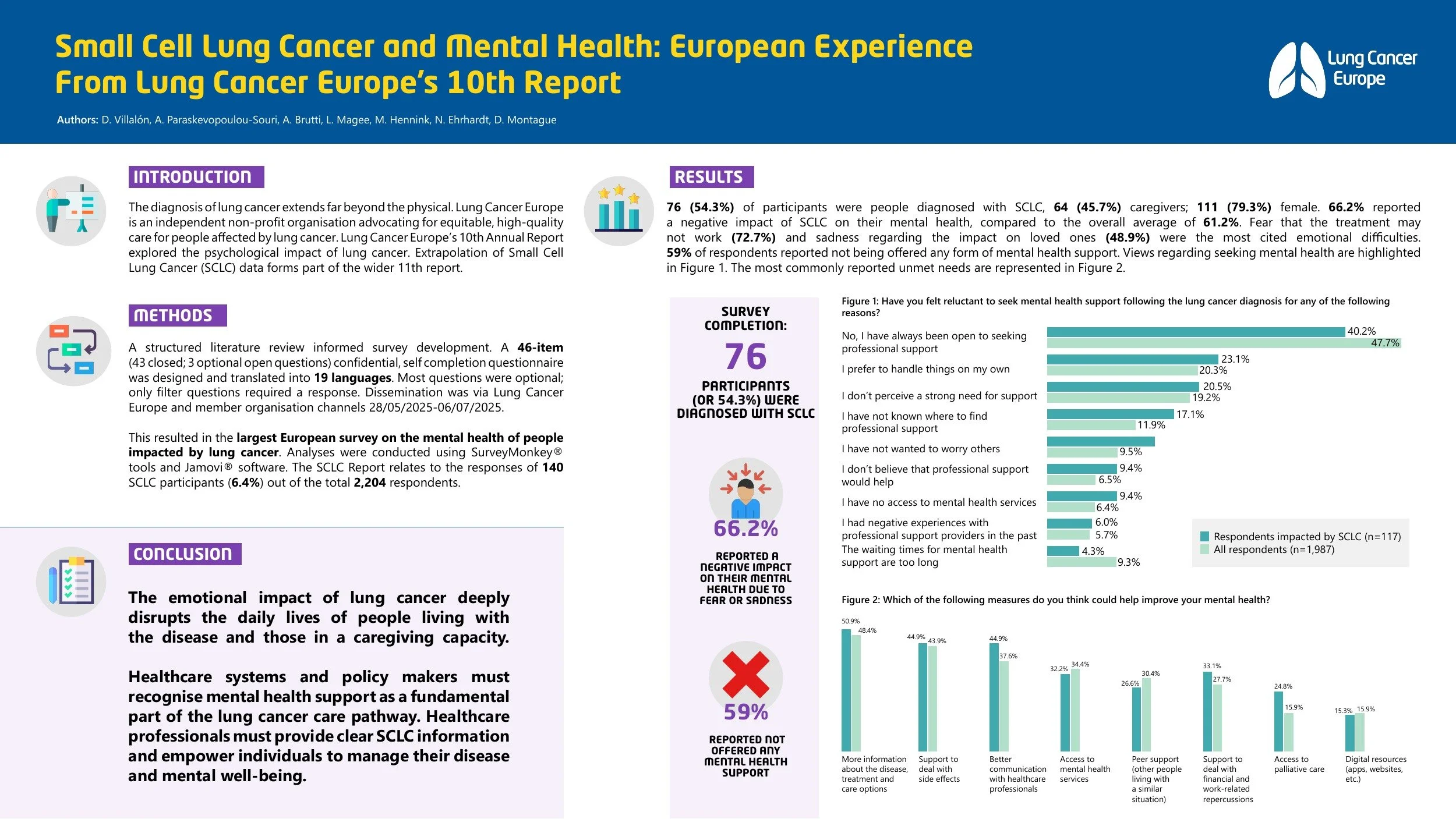
A second analysis looks specifically at the mental health experiences of people affected by small cell lung cancer.
It draws on responses from 140 people affected by SCLC within the wider survey: 76 people diagnosed with SCLC and 64 caregivers.
Two thirds reported that SCLC had negatively affected their mental health. Fear that treatment might not work and sadness about the impact on loved ones were among the most frequently reported difficulties. Almost six in ten said they had not been offered any mental health support.
The findings show the need for mental health support and clear information to be included throughout SCLC care.
Turning screening evidence into policy
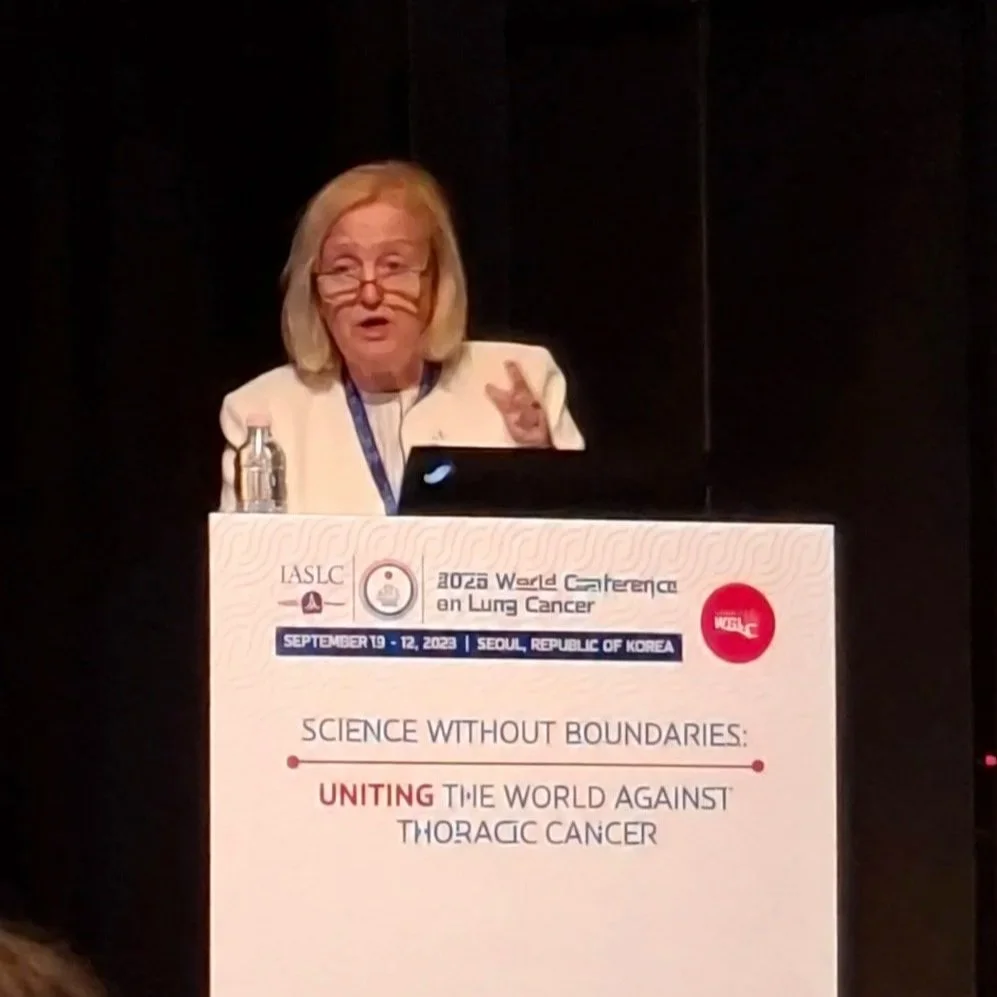
Debra Montague speaking at Lung Cancer Policy Network workshop during WCLC 2026 in Seoul.
President Debra Montague took part in a Lung Cancer Policy Network workshop on moving lung cancer screening evidence into policy.
The session looked at the practical work involved: identifying the right decision-makers, making a clear policy ask and responding to objections.
Evidence for lung cancer screening is strong, but access remains uneven across Europe. Advocates also need the skills and tools to turn that evidence into action.
Improving lung cancer diagnosis
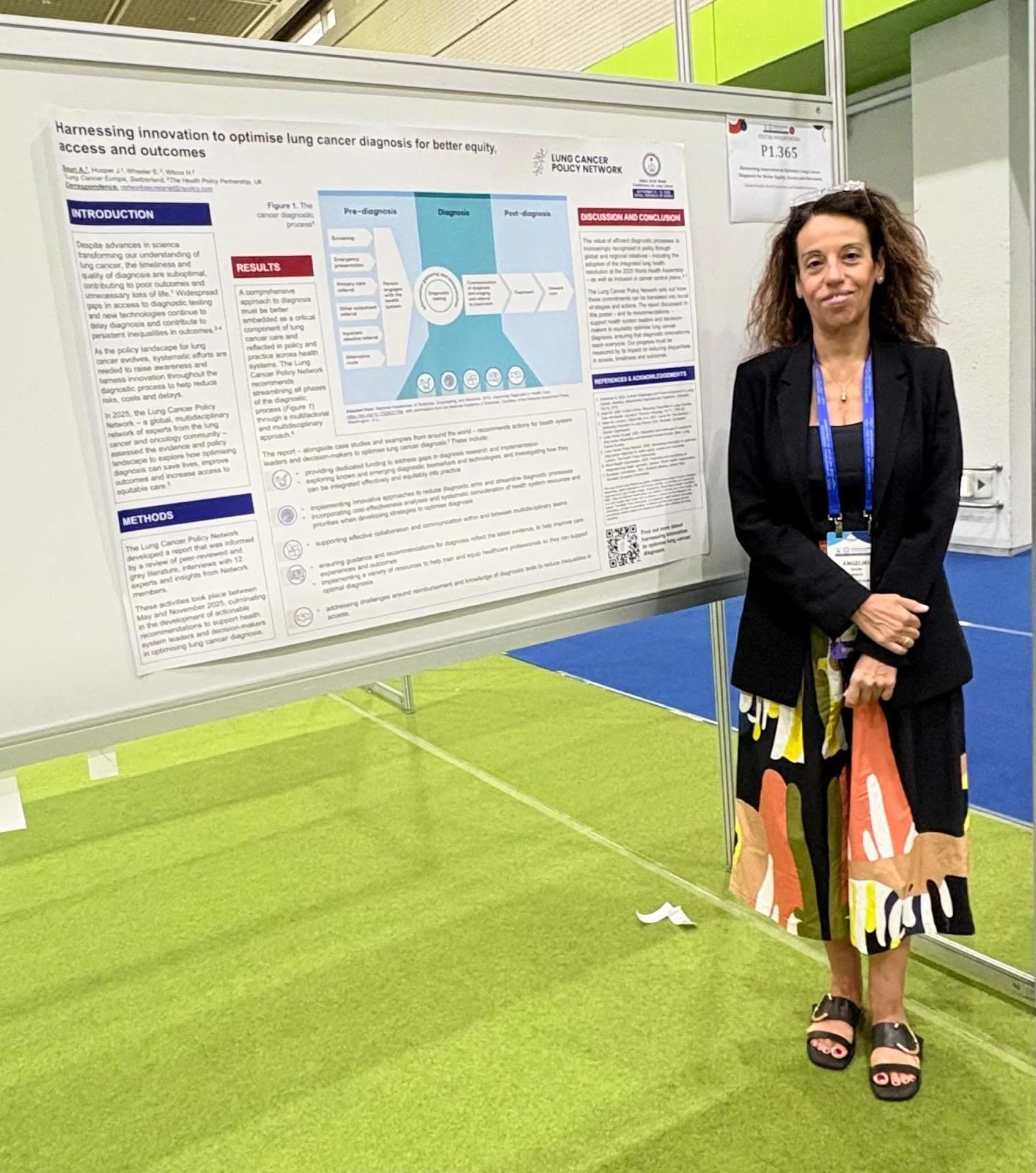
Vice President Angeliki Souri presented work developed with Lung Cancer Policy Network.
Vice President Angeliki Souri presented work developed with Lung Cancer Policy Network.
The abstract, Harnessing innovation to optimise lung cancer diagnosis for better equity, access and outcomes, looks at how new approaches could improve lung cancer diagnosis.
Innovation can help people receive a more accurate diagnosis sooner, but it must also be available fairly. The abstract considers what is needed to ensure advances in diagnosis improve access and outcomes rather than increase existing inequalities.