
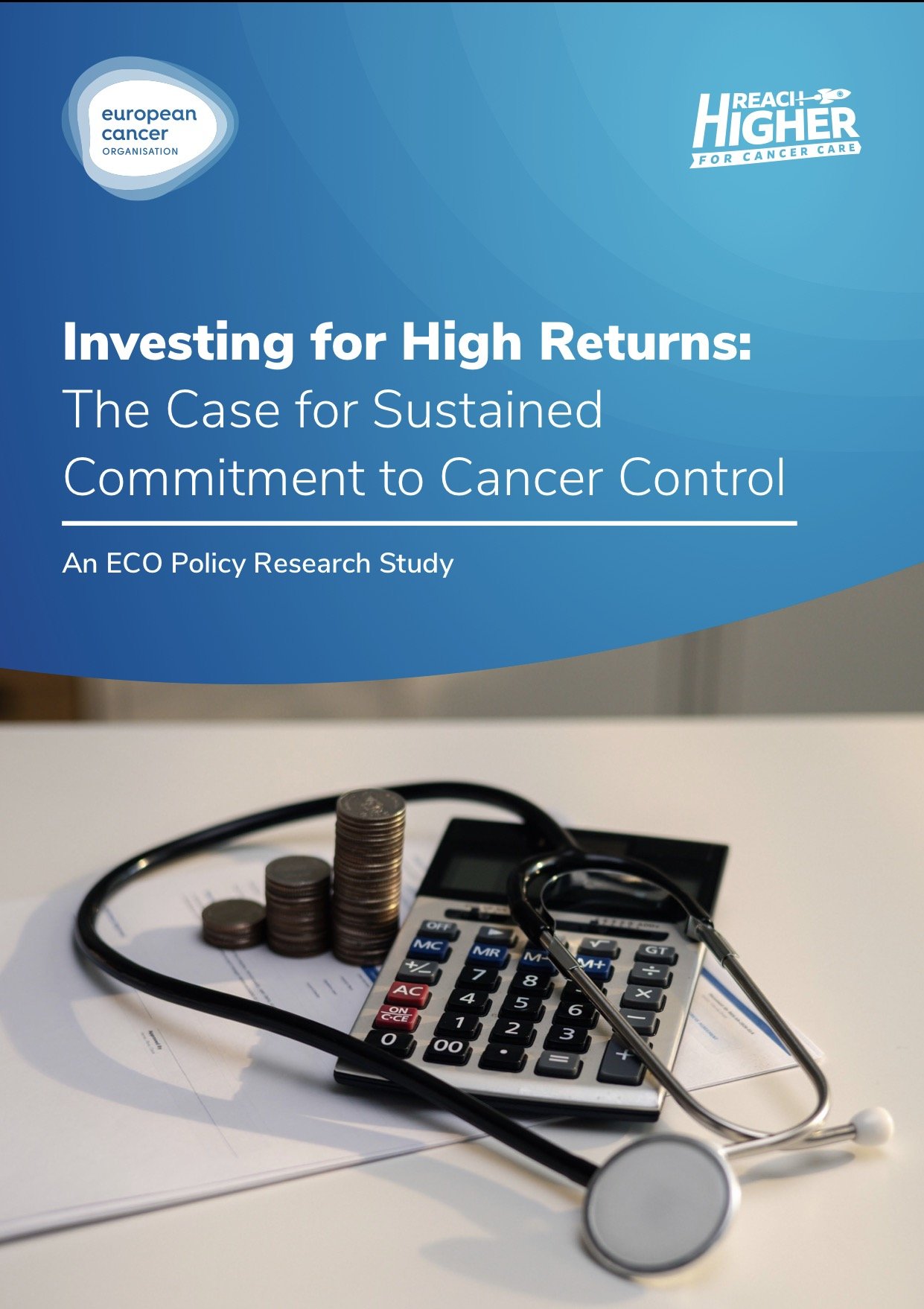
Investing in lung cancer prevention, screening and faster diagnosis returns more than it costs. That is the clear message for lung cancer in Investing for High Returns, a new study from the European Cancer Organisation launched at the European Cancer Summit 2026. The report reviews European evidence across nine areas of cancer control and finds positive returns in every one.
Lung cancer runs through that evidence, from tobacco control to liquid biopsy. This article sets out what the report shows for lung cancer, and why those gains depend on the EU keeping a dedicated health budget after 2027.
Key points
Prevention is underfunded. Lung cancer causes 18% of all preventable deaths in the EU, more than any other cause, yet only about 4% of EU health spending went on prevention in 2023.
Screening pays for itself. Low-dose CT screening of people at high risk reduces lung cancer deaths by 21%, and modelling for Austria shows a health gain worth about twice the cost.
Liquid biopsy speeds up diagnosis. England's "blood test first" approach for suspected advanced lung cancer gave genomic results about two weeks faster, with benefits outweighing costs.
Biomarker testing lags behind the evidence. Fewer than 10% of tumours that need molecular testing in Europe are analysed with next-generation sequencing, mainly because of funding and infrastructure barriers.
The next EU budget puts these gains at risk. The proposed 2028 to 2034 budget would end EU4Health and leave health without a ring-fenced budget.
What is the Investing for High Returns report?
Investing for High Returns is a policy research study by the European Cancer Organisation, part of its Reach Higher for Cancer Care campaign. It brings together European evidence on the economic and human value of cancer control across nine areas: prevention, early detection, diagnosis, treatment and care, survivorship, research and innovation, infrastructure, workforce and inequalities, with 17 case studies.
The scale of the challenge is large. Around 4.3 million people are diagnosed with cancer in Europe each year and close to 2 million die from it. In 2023, cancer cost €228 billion across 31 European countries through healthcare spending and lost productivity. Families provide a further €26 billion in unpaid care, based on the most recent estimate from 2018.
Lung cancer carries a heavy share of that cost. Paid work lost to premature cancer deaths is projected at €1.3 trillion between 2018 and 2040, and lung and colorectal cancer account for the largest losses.
How much lung cancer could Europe prevent?
Prevention offers the biggest opportunity in lung cancer. Lung cancer alone accounts for 18% of all preventable deaths in the EU, more than any other cause, yet only about 4% of total EU health spending was allocated to prevention in 2023.
OECD modelling shows what is possible. If every European country reached the lowest levels of major risk factors already seen in the region, around 300,000 cancer cases would be prevented each year, including 27% of new lung cancer cases. That would save an estimated €61 billion in healthcare costs every year: €20 billion in cancer care and €41 billion for related diseases.
Tobacco control is among the best value public health measures available. A study of youth smoking policies in Finland, Ireland, the Netherlands, Belgium, Germany, Italy and Portugal found every policy was highly cost-effective in every country. Each cost at least 45 times less per healthy life year gained than the World Health Organization's benchmark for a highly cost-effective intervention.
The report's prevention measures go beyond smoking. They include extending tobacco rules to e-cigarettes and novel nicotine products, cleaner air in line with WHO guidelines, radon testing and remediation, and enforcing limits on workplace carcinogens. These measures are especially relevant for people who develop lung cancer without ever having smoked.
Is lung cancer screening cost-effective?
Yes. Low-dose CT screening of people at high risk reduces lung cancer mortality by 21%, according to evidence reviewed for the fifth European Code Against Cancer.
The Dutch-Belgian NELSON trial screened more than 15,000 high-risk current and former smokers and found a 24% reduction in lung cancer deaths among men at ten years. That evidence helped bring about the 2022 EU Council Recommendation asking Member States to explore organised lung cancer screening, the first time lung cancer featured in EU screening guidance.
National evaluations show the economic case holds:
Austria: modelled screening of around 300,000 people at 50% uptake would avert 11,906 premature lung cancer deaths and find 25,893 more early-stage cancers, at €24,627 per quality-adjusted life year. That is about €2.8 billion of health gain for €1.4 billion of cost, before counting productivity gains.
Hungary: screening came in at €5,707 per quality-adjusted life year.
Across Europe: the cost per quality-adjusted life year ranges from €9,000 to €85,000, the widest of the four recommended screening programmes, because CT and late-stage treatment costs vary so much between countries.
Sources: ten Berge et al., Cancers, 2024; Nagy et al., Value in Health Regional Issues, 2023; European Cancer Organisation, Investing for High Returns, 2026.
Pairing lung screening with stop-smoking support improves cost-effectiveness enough to produce a net monetary benefit.
Even so, only a few countries have turned the 2022 Recommendation into a national programme. Lung Cancer Europe's Get Checked! campaign works to improve early diagnosis of lung cancer across Europe.
Debra Montague, President of Lung Cancer Europe, raised the gap between the 2022 Recommendation and national programmes at the European Cancer Summit 2026. She spoke in the session "From Risk Reduction to Early Diagnosis: Reimagining Europe's Cancer Prevention Pathway", organised by the European Cancer Organisation's Prevention, Early Detection and Screening Network. The session covered stronger regulation of risk factors, how screening programmes are put in place and faster routes to diagnosis.
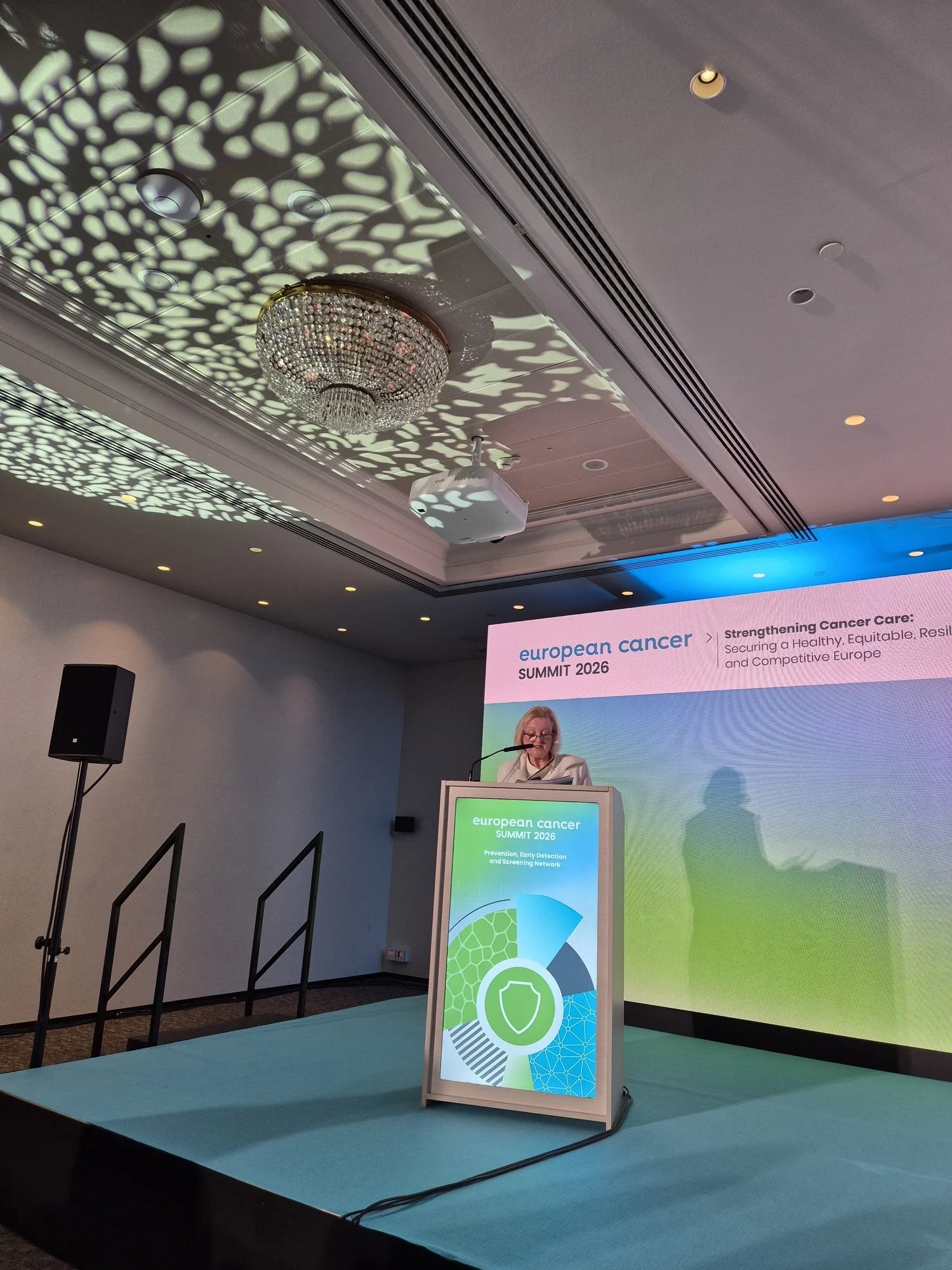
Debra Montague, President of Lung Cancer Europe, speaking in the Prevention, Early Detection and Screening Network session at the European Cancer Summit 2026.
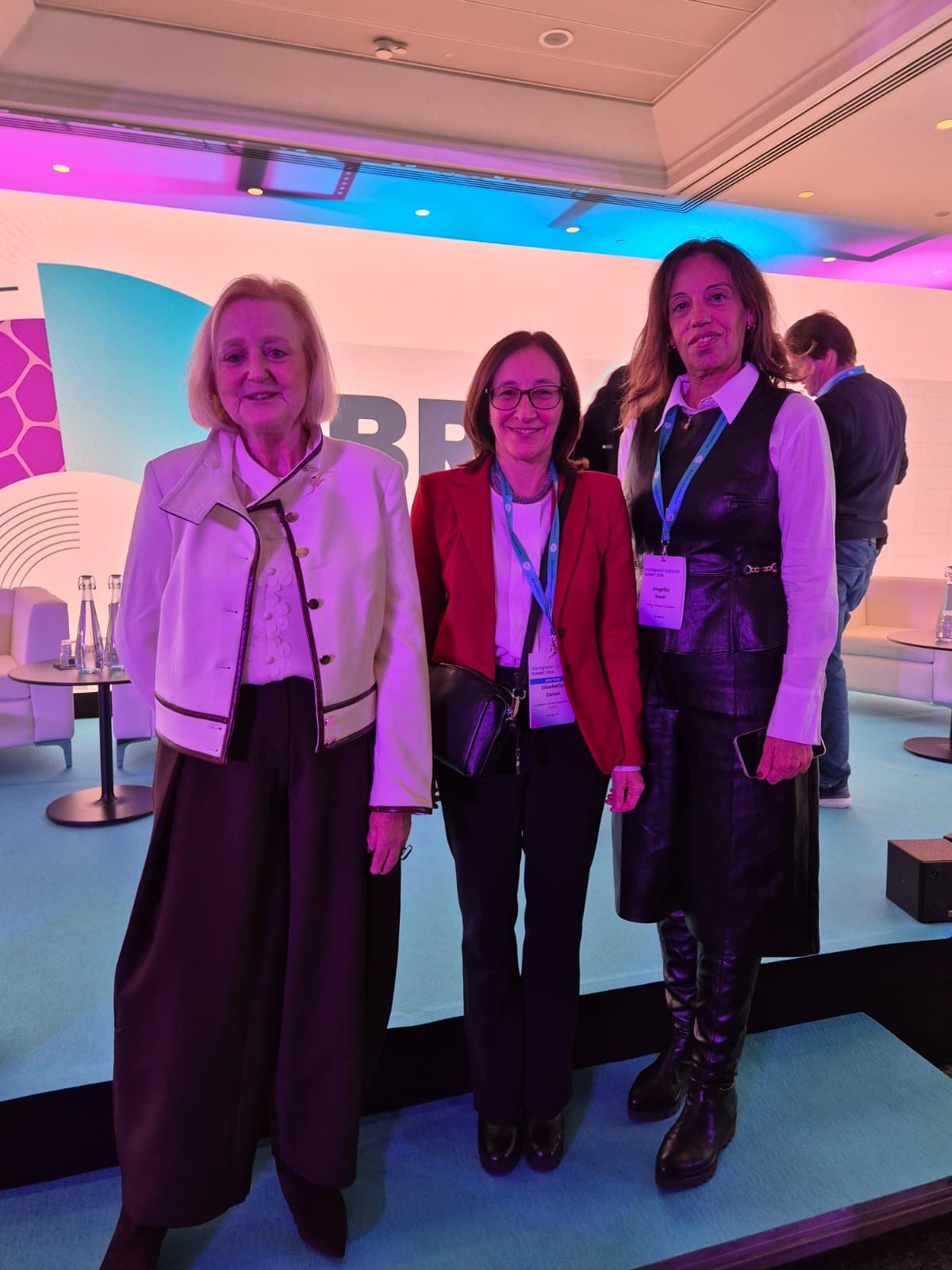
From left: Debra Montague, President of Lung Cancer Europe, Elisabetta Zanon and Angeliki Souri, Vice President of Lung Cancer Europe, at the European Cancer Summit 2026.
Does liquid biopsy make lung cancer diagnosis faster?
Yes, and it saves money as well as time. The World Health Organization reports that in high-income countries, treating cancers diagnosed early costs 2 to 4 times less than treating advanced disease.
The report's lead example comes from lung cancer. NHS England commissioned an evaluation of liquid biopsy, a blood test that analyses circulating tumour DNA, for people with suspected advanced non-small cell lung cancer. In a national pilot of 1,296 people, genomic results were available around two weeks sooner, so treatment decisions could be made earlier. The evaluation found a net benefit of about £9 million.
NHS England rolled out this "blood test first" approach nationally in 2025, the first national health service in the world to offer liquid biopsy testing routinely, with up to 15,000 people expected to benefit each year.
Evidence from other countries points the same way:
Germany: for people with EGFR-positive metastatic lung cancer, adding liquid biopsy to tissue testing was both more effective and cheaper.
Spain: for people with advanced lung cancer whose tissue cannot be sampled, blood-based testing was cost-effective at €9,473 per quality-adjusted life year.
Sources: Edge Health for NHS England, 2024; Englmeier et al., Journal of Cancer Research and Clinical Oncology, 2023; Isla et al., Journal of Medical Economics, 2024.
Why is biomarker testing still underused in Europe?
Funding and infrastructure, not cost-effectiveness, hold biomarker testing back. Next-generation sequencing panels are cost-effective compared with single-gene tests once four or more genes need testing, which is now the norm in many advanced cancers. Yet fewer than 10% of tumours that need molecular testing in Europe are analysed with next-generation sequencing.
The report concludes that much of this value remains unrealised. Capturing it depends on investment in laboratory capacity, faster turnaround of results and specialist training.
Does specialist nurse support save money in lung cancer?
Yes, and lung cancer shows the clearest effect. A Department of Health model for England found that extending one-to-one support from clinical nurse specialists and care coordinators to everyone with cancer would save the NHS around £19 million a year overall.
Avoided emergency admissions drive much of that saving. In lung cancer, fewer emergency bed days account for more than 70% of the savings, because people with lung cancer are admitted as emergencies particularly often. The model dates from 2010, but emergency presentation remains a concern in lung cancer across Europe.
What does the next EU budget mean for lung cancer care?
The gains described above depend on sustained, predictable funding, and that funding is now uncertain. The European Commission's proposal for the 2028 to 2034 Multiannual Financial Framework would end EU4Health as a standalone programme and fold health into a wider competitiveness fund with no dedicated allocation.
EU funding has already supported lung cancer progress. Europe's Beating Cancer Plan and the EU Mission on Cancer have run since 2021, and EU4Health co-funds SOLACE, a project supporting lung cancer screening programmes across 15 Member States. Many EU cancer actions run to 2030 and their targets to 2040, well beyond the current budget.
The European Cancer Organisation is calling for a ring-fenced health programme in the next budget to protect what Europe has already built. Lung Cancer Europe supports that call.
Negotiations on the next EU budget will continue through 2027. Member organisations can use the evidence in Investing for High Returns when they speak with national governments and MEPs about protecting health funding.
Frequently asked questions
Is lung cancer screening worth the cost in Europe?
The evidence says yes. Low-dose CT screening of people at high risk reduces lung cancer deaths by 21%, and modelling in Austria and Hungary finds it well within accepted cost-effectiveness thresholds. Adding stop-smoking support improves the value further.
What is a liquid biopsy and how does it help people with lung cancer?
A liquid biopsy is a blood test that looks for DNA shed by a tumour. In lung cancer it can identify the tumour's genetic changes faster than tissue testing alone, which helps people start the right targeted treatment sooner. In England it gave results about two weeks faster and is now used routinely.
How many lung cancers could Europe prevent?
OECD modelling suggests that if every European country matched the best risk factor levels already seen in the region, 27% of new lung cancer cases would be prevented each year. Tobacco control, cleaner air, radon testing and workplace protections all contribute.
What is the EU Multiannual Financial Framework and how does it affect cancer care?
The Multiannual Financial Framework is the EU's long-term budget, set for seven years at a time. The current one funds EU4Health, which supports Europe's Beating Cancer Plan. The proposal for 2028 to 2034 would end EU4Health as a separate programme, so health would no longer have money set aside for it.
Who published Investing for High Returns?
The European Cancer Organisation published the report as part of its Reach Higher for Cancer Care campaign. It was launched at the European Cancer Summit 2026 and is free to read on the European Cancer Organisation website.
Lung cancer is where Europe has the most to gain from investing in cancer control. Prevention could stop more than a quarter of new cases, screening finds cancers earlier for a modest cost, and faster biomarker testing gets people onto the right treatment sooner while saving money. These returns are within reach, but only if the EU keeps a dedicated health budget. Read the full Investing for High Returns report and use its evidence to make the case in your country.
About Lung Cancer Europe
Lung Cancer Europe is a pan-European advocacy organisation working for equal access to high-quality lung cancer care across Europe. Our members are national lung cancer advocacy organisations, and we bring their evidence and experience to European policymakers. Through our annual Lung Cancer Europe Reports, our Charter and the Get Checked! campaign, we work to improve diagnosis, treatment and support for everyone affected by lung cancer.
References
1. European Cancer Organisation. Investing for High Returns: The Case for Sustained Commitment to Cancer Control. November 2026. Report
2. Ortega-Ortega M, Hanly P, Pearce A, et al. Projected impact on labour productivity costs of cancer-related premature mortality in Europe 2018 to 2040. Applied Health Economics and Health Policy, 2023;21(6):877-889. Article
3. OECD and IARC. The impact of the European Code Against Cancer on health, the economy and society. OECD Policy Briefs No. 40, 2025. Policy brief
4. Leão T, Perelman J, Clancy L, et al. Economic evaluation of five tobacco control policies across seven European countries. Nicotine and Tobacco Research, 2020;22(7):1202-1209. Article
5. Toes-Zoutendijk E, Arbyn M, Auvinen A, et al. European Code Against Cancer, 5th edition: Organised cancer screening programmes. Molecular Oncology, 2026;20(1):134-153. Article
6. de Koning HJ, van der Aalst CM, de Jong PA, et al. Reduced lung-cancer mortality with volume CT screening in a randomized trial. New England Journal of Medicine, 2020;382(6):503-513. Article
7. Council of the European Union. Council Recommendation of 9 December 2022 on strengthening prevention through early detection: a new EU approach on cancer screening (2022/C 473/01). Guidance
8. ten Berge H, Ramaker D, Piazza G, et al. Shall we screen lung cancer with volume computed tomography in Austria? A cost-effectiveness modelling study. Cancers, 2024;16(15):2623. Article
9. Nagy B, Szilberhorn L, Győrbíró DM, et al. Shall we screen lung cancer with low-dose computed tomography? Cost-effectiveness in Hungary. Value in Health Regional Issues, 2023;34:55-64. Article
10. Edge Health. A health economics evaluation of ctDNA testing in NSCLC. Report commissioned by NHS England, 2024. Report
11. NHS England. NHS first in world to roll out "revolutionary" blood test for cancer patients. May 2025. Press release
12. Englmeier F, Bleckmann A, Brückl W, et al. Clinical benefit and cost-effectiveness analysis of liquid biopsy application in patients with advanced non-small cell lung cancer (NSCLC): a modelling approach. Journal of Cancer Research and Clinical Oncology, 2023;149:1495-1511. Article
13. Isla D, Álvarez R, Arnal M, et al. Detection of genomic alterations in liquid biopsies from patients with non-small cell lung cancer using FoundationOne Liquid CDx: a cost-effectiveness analysis. Journal of Medical Economics, 2024;27(1):1379-1387. Article
14. Normanno N, Apostolidis K, Wolf A, et al. Access and quality of biomarker testing for precision oncology in Europe. European Journal of Cancer, 2022;176:70-77. Article
15. Frontier Economics. One to one support for cancer patients: a report prepared for the Department of Health. 2010. Report
16. European Commission. SOLACE: Strengthening the screening of Lung Cancer in Europe. EU4Health project page. Webpage