
Results presented at the ESMO Congress 2026 in Madrid mark one of the biggest steps forward in small cell lung cancer (SCLC) treatment in years. They arrive as Lung Cancer Europe launches its new report on what living with SCLC is like across Europe.
DeLLphi-305: longer survival in extensive-stage SCLC
On 24 October, Dr Jacob Sands of Dana-Farber Cancer Institute presented the phase 3 DeLLphi-305 trial at the congress’s Presidential Symposium. It included 563 people with extensive-stage SCLC whose cancer had not progressed after first-line chemotherapy with the immunotherapy durvalumab.
Participants were randomly assigned to maintenance treatment with tarlatamab plus durvalumab, or durvalumab alone. Median overall survival was 21.1 months with the combination, compared with 12.7 months with durvalumab alone: a 58% lower risk of death.
The results were published at the same time in the New England Journal of Medicine. Cytokine release syndrome, a known side effect of tarlatamab, affected around half of people on the combination, mostly at a mild or moderate level.
Expert reaction: a new standard of care for extensive-stage SCLC
Dr Antonio Calles, Medical Oncologist at Hospital General Universitario Gregorio Marañón in Madrid, summed up the response at the congress: “A new chapter in SCLC therapy has been written.”
He described DeLLphi-305 as setting “a new standard of care in maintenance” for people with extensive-stage SCLC after first-line chemotherapy and immunotherapy.
Living with small cell lung cancer in Europe: our new report
In Europe, tarlatamab has been approved since June 2026 for people whose SCLC has progressed after first-line chemotherapy. The combination tested in DeLLphi-305 is not yet approved here.
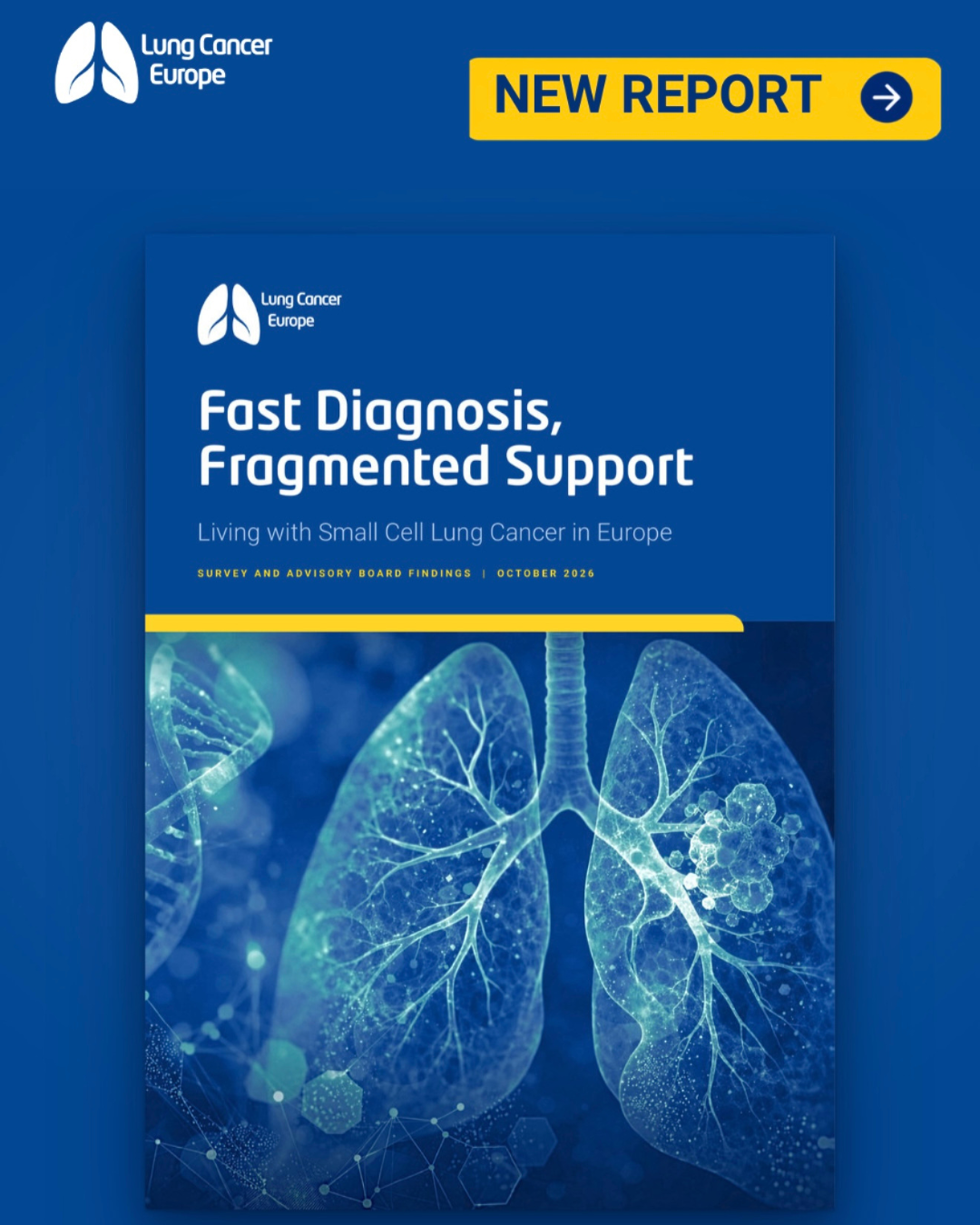
Turning results like these into longer, better lives also depends on what happens around treatment. Our new report, Fast Diagnosis, Fragmented Support: Living with Small Cell Lung Cancer in Europe, draws on a survey of 67 people across Europe and the insights of our SCLC Advisory Board.
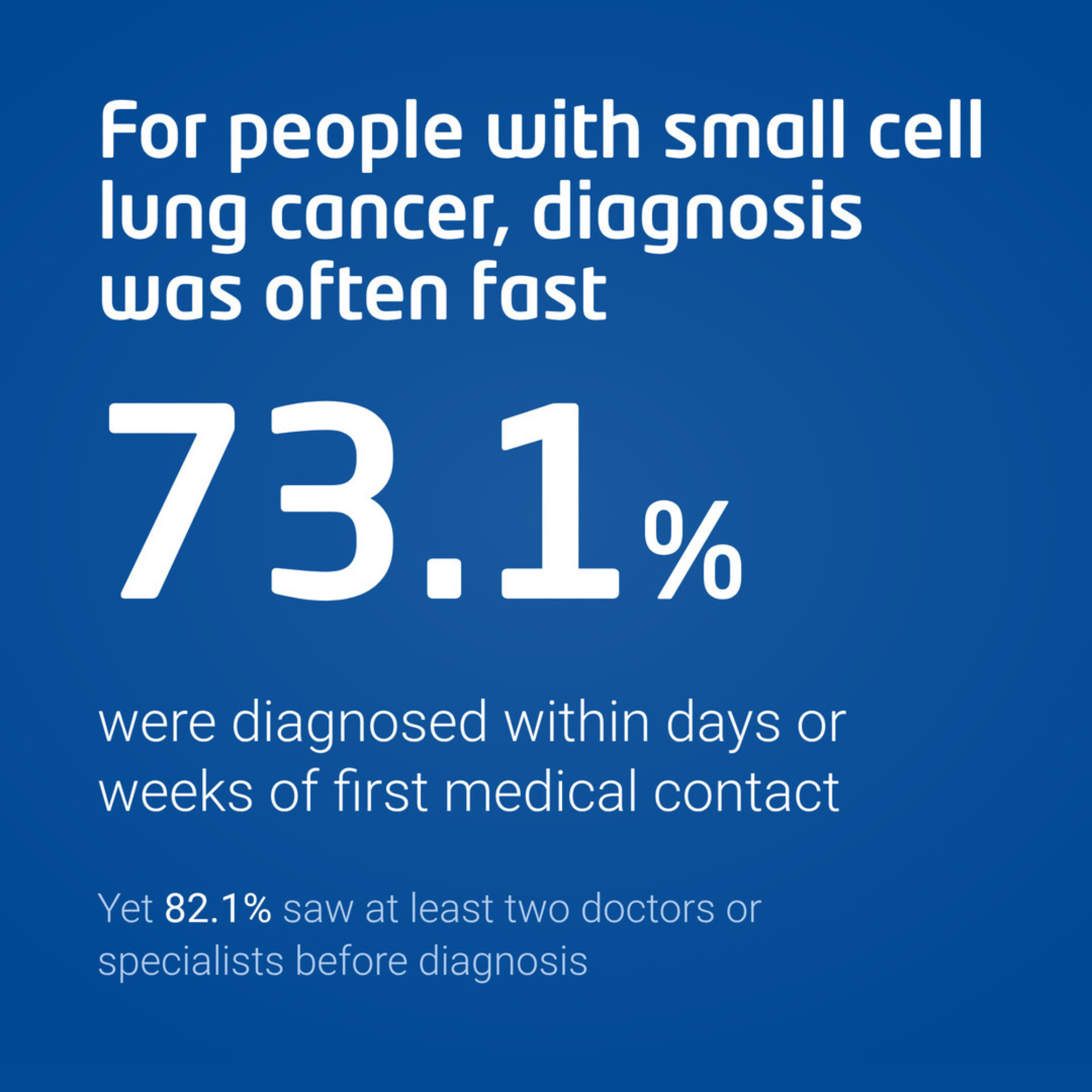
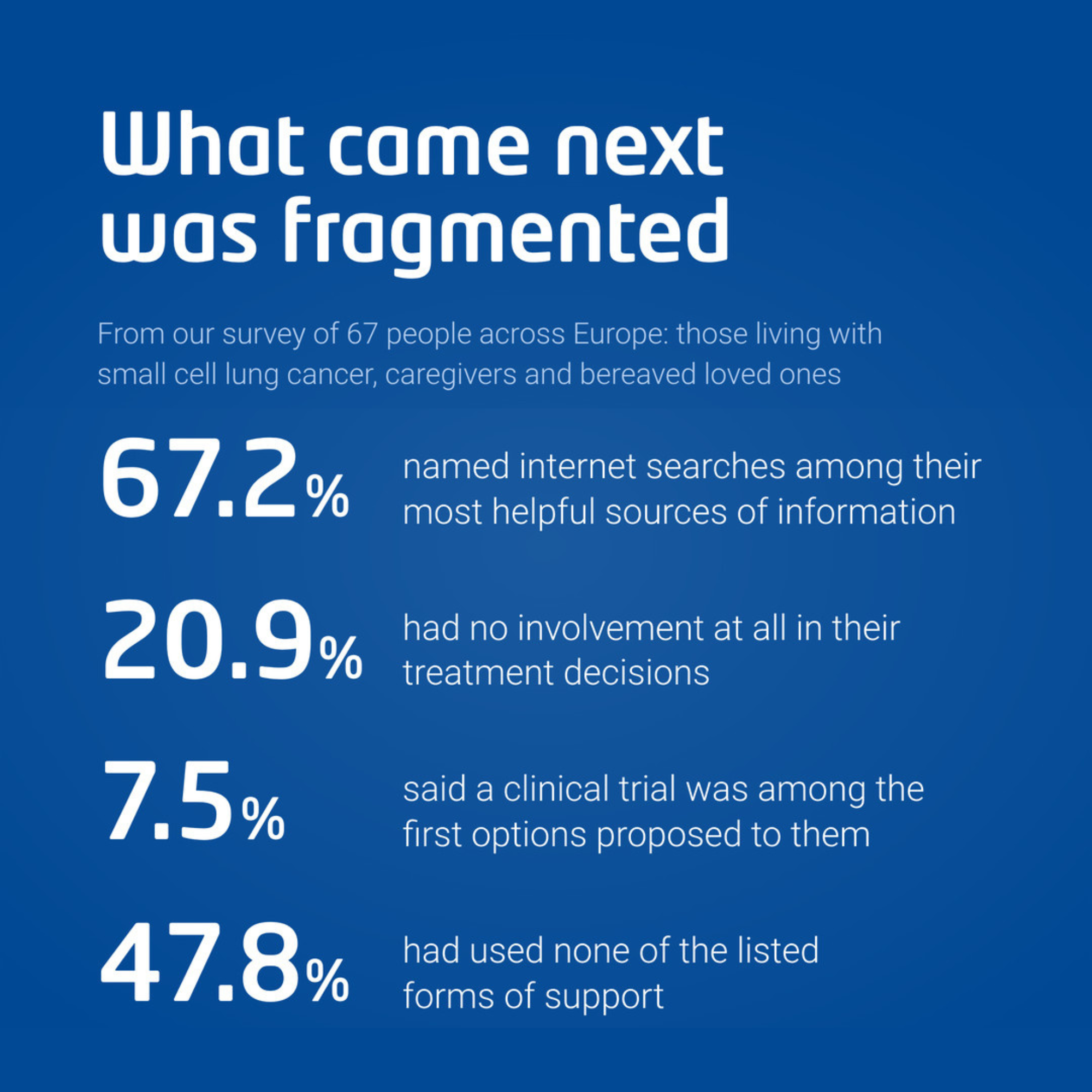
Most respondents were diagnosed within days or weeks, but what came next was fragmented. Just 7.5% said a clinical trial was among the first options proposed to them, and nearly half (47.8%) had used none of the listed forms of support.
As Dr Misty Shields, Thoracic Medical Oncologist and Physician-Scientist, writes in the report’s foreword: “Breakthrough scientific advances only matter if people can actually reach them.”
Read the report
The report sets out practical recommendations for clinicians, policymakers, health systems, industry, caregivers and patient organisations. They range from support offered at diagnosis to earlier conversations about clinical trials and fairer access to treatment across Europe.
Sources
Dana-Farber news release via News-Medical, 26 October 2026: trial design, 563 participants, presenter, Presidential Symposium, side effects
AstraZeneca press release, 24 October 2026: 21.1 vs 12.7 months, hazard ratio 0.42, NEJM publication
The Pharma Letter, 2 June 2026: European approval of tarlatamab after first-line chemotherapy