
New European report calls for faster access to cancer research and care
Europe has some of the world’s leading cancer researchers and healthcare institutions. But advances in research are not always reaching the people who need them quickly enough.
A new report published today by the European Cancer Organisation (ECO) calls for stronger European cooperation, faster clinical trials and better access to new treatments and technologies.
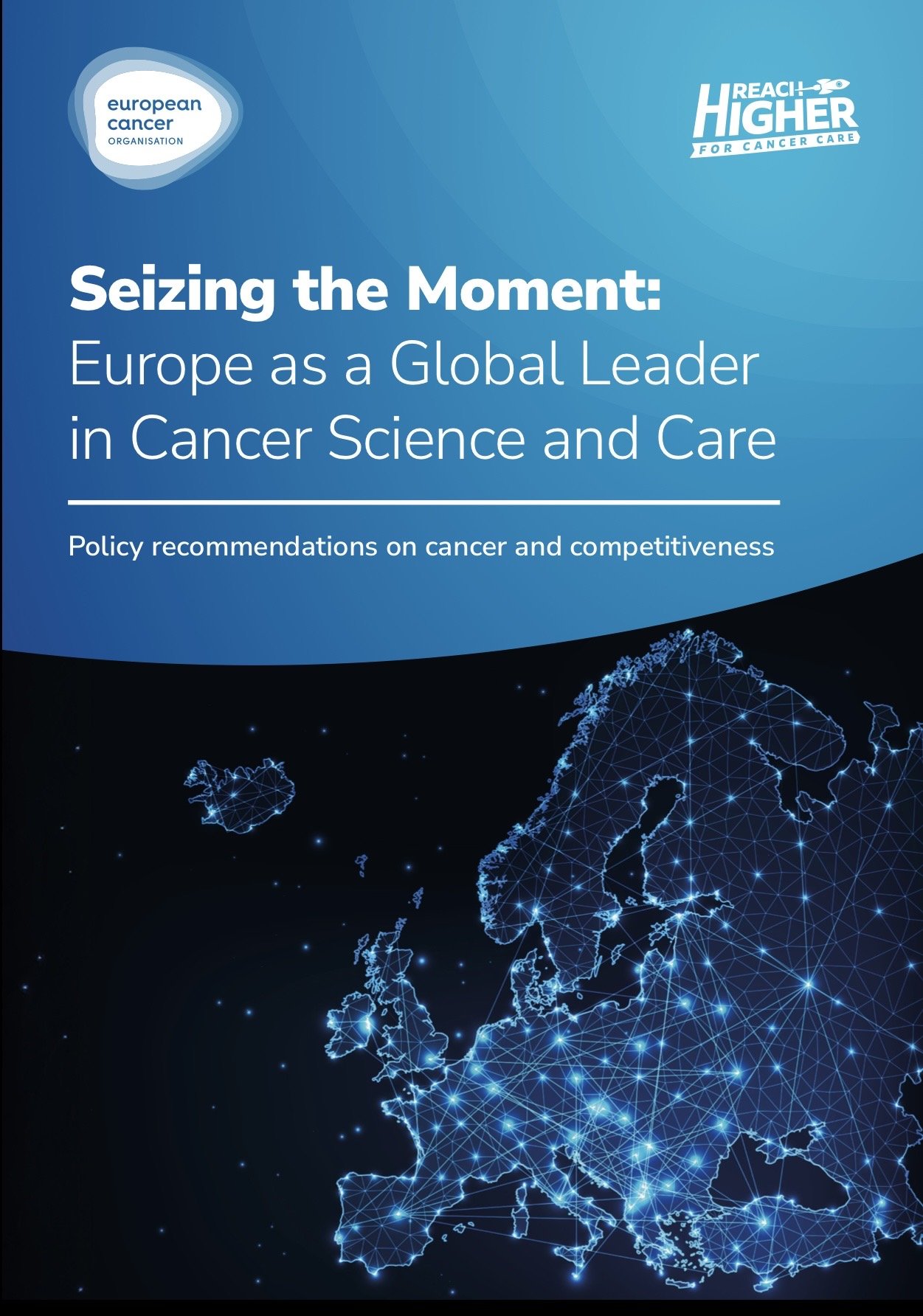
Seizing the Moment: Europe as a Global Leader in Cancer Science and Care examines how Europe can make better use of its research strengths while improving cancer care across countries.
The 44-page report highlights several challenges that are particularly relevant to lung cancer, including delays in introducing screening programmes, unequal access to molecular testing and long waits for new medicines.
Lung cancer screening: strong evidence, slow progress
Europe has played a leading role in demonstrating the benefits of lung cancer screening.
The report highlights major European studies, including NELSON, MILD and LUSI, which have helped establish the evidence for low-dose CT screening.
The NELSON trial, conducted in the Netherlands and Belgium, found around a 24% reduction in lung cancer deaths among men offered screening compared with those who were not.
In 2022, the Council of the European Union recommended that Member States explore the phased introduction of lung cancer screening for people at high risk.
However, the new report warns that organised screening remains limited across much of Europe, despite the evidence supporting earlier detection.
It also highlights SOLACE, a European project bringing together organisations from 15 countries to help turn lung cancer screening research into practical programmes.
Unequal access to molecular testing and treatment
Molecular testing can identify changes in cancer cells that help doctors choose the most appropriate treatment, including targeted therapies for some types of lung cancer.
Yet access to comprehensive genomic testing and specialist expertise varies considerably between European countries.
The report also identifies lengthy delays in access to newly authorised cancer medicines.
According to figures cited in the report, the average time between European Medicines Agency authorisation and availability of oncology medicines across the EU was 655 days, or almost 22 months.
These figures cover cancer medicines generally, rather than lung cancer treatments alone, but they highlight the wider challenge of ensuring that new treatments reach people promptly.
Making clinical trials easier to run
Clinical trials are essential for developing and evaluating new cancer treatments. They can also provide opportunities for people to access treatments being studied.
The report calls for fewer unnecessary administrative delays, better coordination between research centres and greater support for clinical trials involving multiple European countries.
It also recommends making better use of health data to support research and decisions about cancer care, with appropriate safeguards.
What does the report recommend?
The European Cancer Organisation is calling on EU decision-makers to:
Maintain and strengthen Europe’s Beating Cancer Plan and the EU Cancer Mission.
Develop a dedicated European strategy for cancer research, development and implementation.
Reduce unnecessary bureaucracy and delays in clinical trials.
Improve coordination between European research and healthcare systems.
Track how quickly new treatments and technologies become available, and whether people can access them.
Involve patient organisations as ongoing partners in European cancer policy.
These proposals are intended to support the European Commission’s wider competitiveness agenda, which aims to strengthen Europe’s economy, research and innovation.
What does this mean for lung cancer?
For people affected by lung cancer, advances in research are only part of the picture.
Earlier diagnosis, timely molecular testing, access to appropriate treatments and opportunities to participate in clinical research all depend on how healthcare systems put scientific evidence into practice.
The report draws attention to the continuing differences between European countries and calls for greater coordination to address them.
The challenge is not only developing better approaches to cancer care, but making sure people can benefit from them wherever they live.
The European Cancer Organisation plans to publish a second report in 2027, examining how stronger cancer prevention and care can also support Europe’s wider economic and social wellbeing.
Source: European Cancer Organisation, Seizing the Moment: Europe as a Global Leader in Cancer Science and Care, 8 October 2026.