
What is lung cancer patient navigation?
Lung cancer care can involve scans, biopsies, biomarker testing, surgery, radiotherapy and drug treatment. Different teams may provide each part of that care. Appointments may take place in several hospitals or clinics.
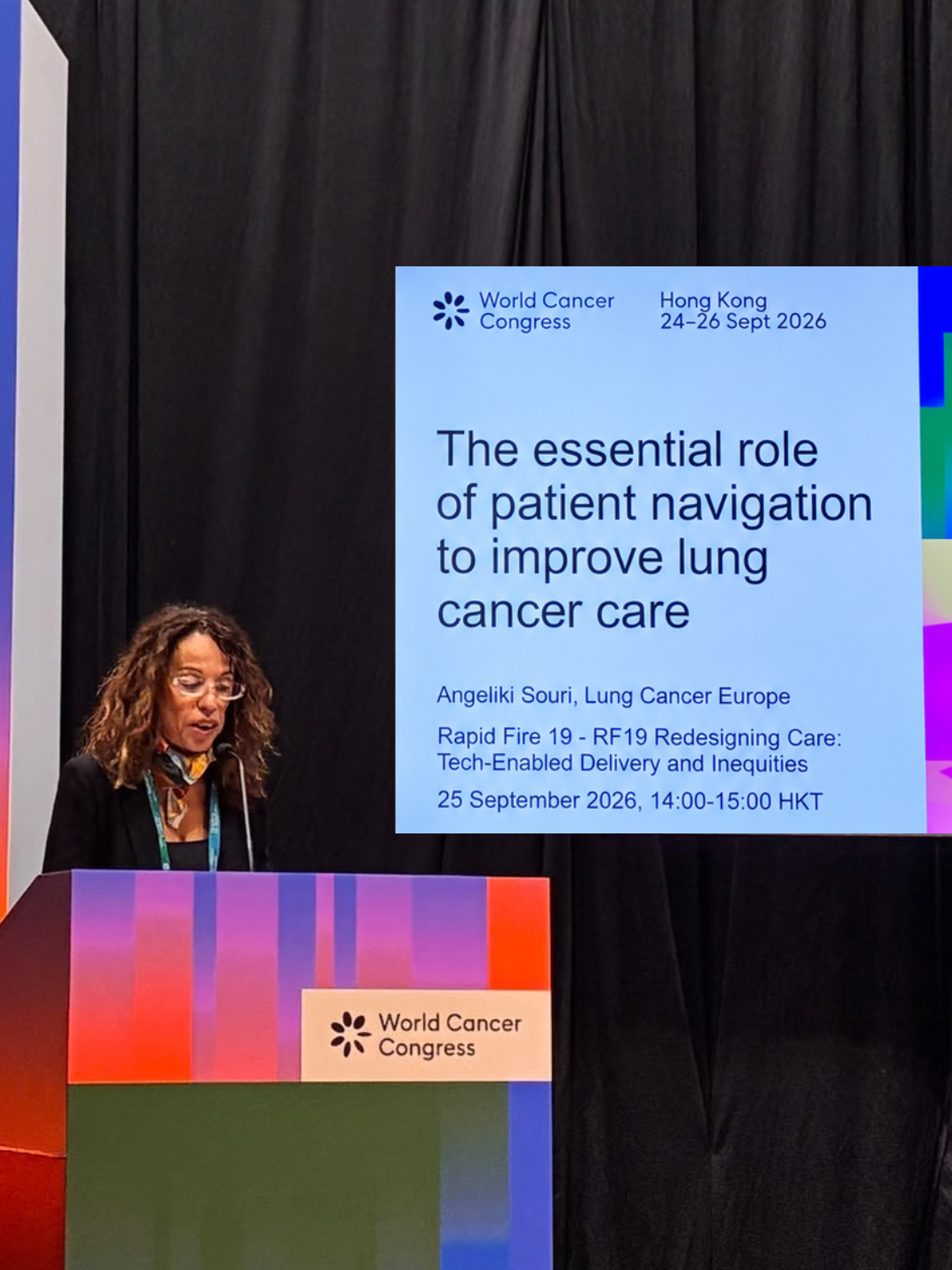
Angeliki Souri, Lung Cancer Vice President at WCC 2026
People can be left trying to understand what happens next, who has their results and who they should contact when they need help.
Patient navigation provides practical support throughout this process.
At the 2026 World Cancer Congress in Hong Kong, Angeliki Souri, Vice President of Lung Cancer Europe, is presenting work from the Lung Cancer Policy Network on patient navigation in lung cancer.
“Patient navigation can play an important role in making lung cancer care more coordinated and more equitable.”
Angeliki Souri, Vice President, Lung Cancer Europe
What does a lung cancer patient navigator do?
A patient navigator helps a person move through the healthcare system. The navigator can provide a clear point of contact between appointments, tests and different clinical teams.
The exact role varies between countries and health systems. A navigator may be a nurse, another healthcare professional or a trained non-clinical member of staff.
According to the Lung Cancer Policy Network report on patient navigation, a navigator may help with:
arranging appointments and referrals
tracking tests and results
explaining the next steps in the care pathway
connecting different healthcare teams
providing information about treatment options and clinical trials
helping people find emotional, financial or practical support
addressing barriers such as transport, language or digital access
supporting follow-up care and symptom management
directing people to local and community services
A navigator does not make treatment decisions. The clinical team remains responsible for diagnosis and treatment. The navigator helps information and care move between the person, their family and the services involved.
Is a patient navigator the same as a lung cancer nurse?
Not always.
Some patient navigators are specialist lung cancer nurses. Their clinical training allows them to provide nursing support as well as help coordinate care.
Other navigators have non-clinical roles. They may focus on appointments, communication, transport, language support or access to local services.
Health systems can use different models. Each model should define the navigator’s role and how it connects with the clinical team. A navigator should strengthen existing services, not replace specialist nurses or other healthcare professionals.
How can patient navigation improve lung cancer care?
The Lung Cancer Policy Network reviewed published research, other reports and examples of existing programmes. It also interviewed 14 experts, including clinicians, navigators, researchers, programme coordinators, advocates and people affected by cancer.
The review found that patient navigation can:
improve coordination between services
reduce gaps in care
help address practical, social and health-system barriers
support continuity from diagnosis through treatment and follow-up
help people understand their care and treatment options
connect people with supportive care
reduce some delays between referral, diagnosis and treatment
Results vary between programmes and health systems. More lung-cancer-specific research is still needed. Programmes should collect data so health systems can see whether navigation improves access, waiting times, experience and outcomes.
A study published in September 2026 offers one example specific to lung cancer. At a hospital in Turkey, 84 people newly diagnosed with non-small cell lung cancer were assigned to usual care or a 12-week nurse navigation programme. The programme included regular phone calls and monthly meetings.
Compared with those receiving usual care, people in the navigation group reported less depression and stress, and better adjustment to their illness and overall quality of life. They also made fewer visits to the emergency department. This was a small study at one hospital, so we need more research to know whether other navigation programmes would achieve the same results.
Why is patient navigation important in lung cancer?
Lung cancer care often moves quickly. A person may need several tests before a treatment plan can be agreed. The results may need review by radiologists, pathologists, surgeons, oncologists and other specialists.
Delays or poor communication at one point can affect the next stage of care.
People may also need help with symptoms, mental health, work, finances, travel and family responsibilities. Stigma can make it harder to ask for support.
A navigator can help identify these needs and connect the person with the right service. This support can continue after treatment or when someone is living with lung cancer as a long-term condition.
Our article on the Lung Health Equity Framework looks at how health systems can identify gaps in lung cancer care, including access to patient navigation, and see who is missing out.
How widely is patient navigation used in Europe?
Formal patient navigation first developed in the United States. Its use in Europe is more recent and varies between countries.
Some services use specialist nurses as navigators. Others have created separate roles for care coordinators, community workers or trained non-clinical staff. Many people still have no access to a named navigator.
The Lung Cancer Policy Network report includes examples from several health systems. In England, patient navigators support communication with local healthcare services as part of the NHS Lung Cancer Screening Programme.
Screening is only one part of the pathway. Navigation may also help during diagnosis, treatment, follow-up and supportive care.
What does an effective lung cancer navigation programme need?
Adding a navigator’s job title will not fix a fragmented pathway. Health systems need to plan the service and connect it with existing care.
A clear role
Navigators need clear responsibilities. People receiving care and members of the clinical team should know what the navigator can do and when to contact them.
Training and support
Navigators need training that matches their role. They also need access to current information about lung cancer, local services and referral routes.
Clinical supervision may be needed when the role includes nursing or other healthcare tasks.
Links between services
A navigator needs effective links with hospitals, diagnostic services, primary care, community services and support organisations.
These links allow the navigator to follow referrals, share information and identify delays.
Stable funding
Short-term projects can show what patient navigation can offer. They cannot provide consistent support without secure funding.
Health systems also need to measure how navigation affects access, waiting times, experience, staff workload and outcomes.
A service designed for local needs
Each health system has different services, resources and barriers. Navigation programmes should reflect local needs rather than copy one fixed model.
The service should also be accessible to people who face language, financial, geographical or digital barriers.
How does patient navigation connect with faster lung cancer care?
Patient navigation cannot solve every delay in lung cancer diagnosis and treatment. Health systems still need enough staff, diagnostic capacity and treatment services.
Navigation can help people move between those services and reduce the risk of missed referrals, unclear communication or lost follow-up.
This work supports Lung Cancer Europe’s call for integrated rapid referral pathways for lung cancer. Fast referral routes need clear coordination from the first concern through diagnosis, treatment and ongoing support.
What needs to change across Europe?
People affected by lung cancer should know who they can contact, what will happen next and where they can get support.
European health systems should assess where people face delays, gaps or repeated handovers. They should consider whether a formal patient navigation service could address those problems.
The Lung Cancer Policy Network recommends that health system leaders:
identify where navigation could improve existing lung cancer care
develop formal programmes where they do not exist
strengthen and evaluate programmes already in place
define roles and governance clearly
provide suitable training and long-term funding
adapt navigation to the needs of each health system and population
Patient navigation should not depend on where a person lives or which hospital provides their care. It should form part of a coordinated lung cancer pathway, with clear standards and proper evaluation.
Read the patient navigation report
Read the Lung Cancer Policy Network report:
Patient navigation for lung cancer: an essential component of care