
SOLACE+ is a new European project to help countries set up lung cancer screening programmes and make sure the people most at risk can use them. It started on 1 November 2026, the first day of Lung Cancer Awareness Month, and runs until 31 October 2029.
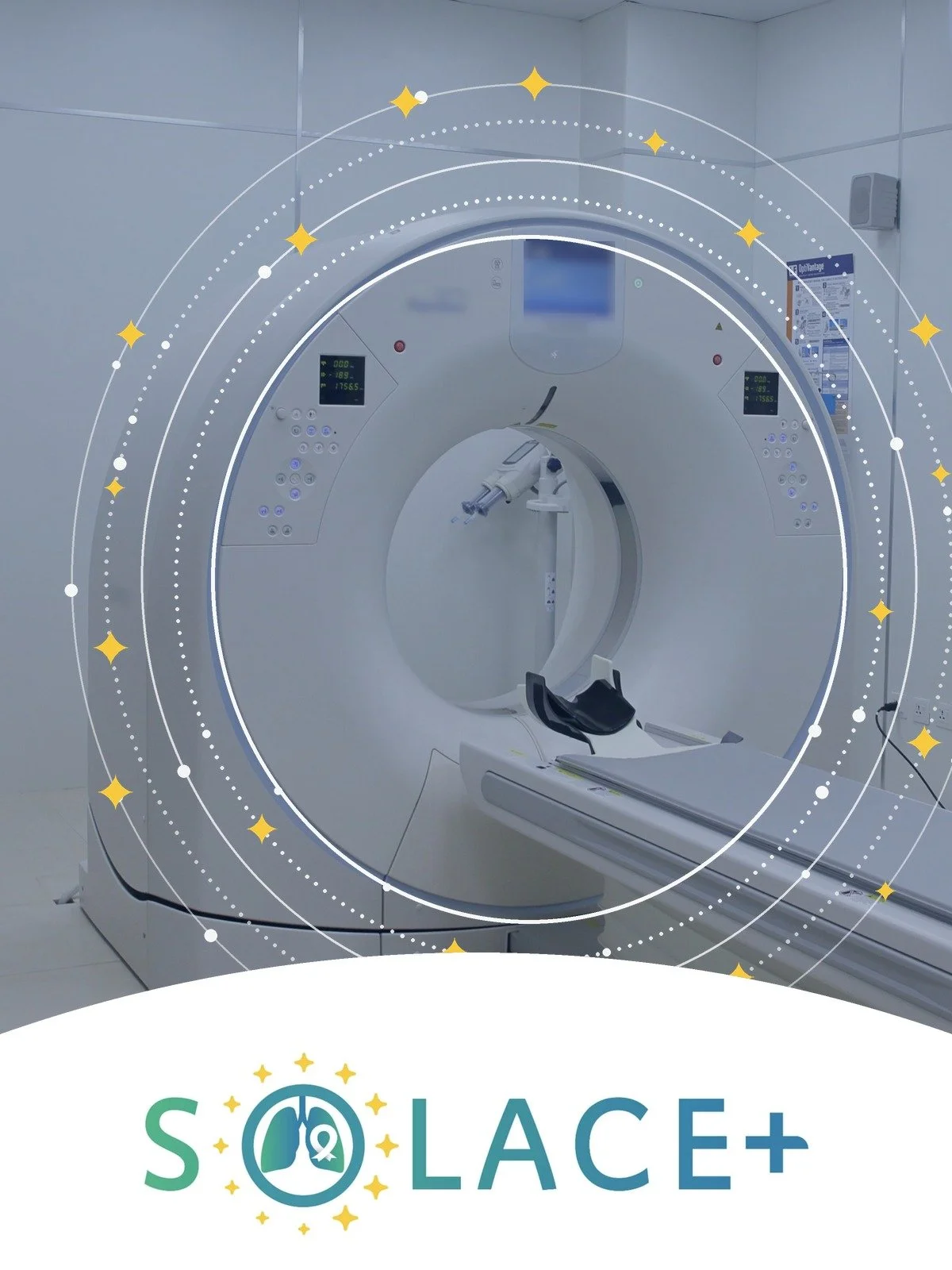
The project brings together 46 partner organisations from 22 EU Member States and Norway. Over three years, it will support 19 countries to introduce or improve screening. It is co-funded by the EU4Health programme, with around €7.4 million of EU funding.
Lung cancer causes more than 250,000 deaths a year in Europe, more than any other cancer.
How lung cancer screening with low-dose CT works
Screening means checking people who have no symptoms, so that cancer can be found early, when treatment is more likely to work. Lung cancer screening uses a low-dose computed tomography (CT) scan of the chest. The scan is quick and painless, and uses far less radiation than a standard CT scan.
Screening is offered to people at higher risk, mainly people who smoke or used to smoke heavily. Programmes also offer support to stop smoking.
Large trials show that screening saves lives. The biggest found that low-dose CT scans cut lung cancer deaths by 20% compared with chest X-rays. The NELSON trial in Belgium and the Netherlands found a 24% fall in lung cancer deaths after 10 years among men at high risk.
In December 2022, EU Member States adopted a Council Recommendation on cancer screening that includes lung cancer screening for people at high risk. Access across Europe is still uneven.
Results from the first SOLACE lung cancer screening project
SOLACE+ builds on the original SOLACE project, which ran from April 2023 to March 2026. SOLACE screened more than 30,000 people across 11 countries, well above its original target. It focused on groups that screening often misses, including:
more than 9,000 women
5,000 people from underserved communities
3,000 people living with a lung condition
The project ran three pilots, each testing a different way to reach people:
Women: led from France, across 14 centres in 10 countries. Different methods reached different people. Community ambassadors and mediators worked better with people with less formal education, while media coverage and links with breast screening reached people with more.
Hard-to-reach communities: led from Hungary, using mobile CT trucks, community mediators, local authority partnerships and free transport.
People with lung conditions: led from the Czech Republic, focusing on people with chronic obstructive pulmonary disease (COPD) and fibrotic lung disease. Lung cancer was found more often in these groups than in the general screening population.
In surveys, 92% of participants said screening was a positive experience. In some countries, up to 61% said taking part had changed how they look after their health.
The findings have already influenced national screening policy in several countries, including Croatia. SOLACE also set up the SOLACE Knowledge Hub, with free resources for health professionals and the public. The European Lung Cancer Screening Alliance, set up by the European Respiratory Society and the European Society of Radiology, will keep the network going.
How SOLACE+ will support lung cancer screening programmes
SOLACE+ will help countries plan, launch, evaluate and improve lung cancer screening programmes. Its work will focus on:
reaching people at high risk who are less likely to come forward for screening
improving the quality of screening and training the staff who deliver it
helping people stop smoking
encouraging people to come back for follow-up scans after their first one
finding and managing other smoking-related conditions picked up during screening
The project will also test AI tools that help radiologists spot lung nodules, assess risk and work more efficiently. Trained doctors will still make all decisions about a person's care.
SOLACE+ supports Europe's Beating Cancer Plan by helping countries put the EU recommendation on cancer screening into practice.
Community involvement and the role of Lung Cancer Europe
The European Lung Foundation is a SOLACE+ partner through Lungs Europe, alongside the European Respiratory Society. Lungs Europe leads the project's community engagement and communications work. This includes running the SOLACE+ website and Knowledge Hub, and public awareness campaigns about lung cancer screening.
The European Lung Foundation will work with its Lung Cancer Patient Advisory Group and with Lung Cancer Europe. The aim is for people eligible for screening, lung cancer communities and advocacy organisations to share their experience and help guide the project.
The European Respiratory Society and the European Lung Foundation will also share the project's recommendations with decision-makers, including through their MEP Lung Health group of Members of the European Parliament.
Lung cancer screening: one participant's experience
Maria, 68, from Athens in Greece, took part in a SOLACE pilot. She had no symptoms, but her scan found a spot on her lung that was later confirmed as cancer.
Speaking to the European Lung Foundation, Maria said she would not have had any tests if she had not joined the pilot. She encourages others not to be afraid of screening and to see it as "an act of self-care".
Who leads SOLACE+ and how it is funded
The European Institute for Biomedical Imaging Research (EIBIR) coordinates SOLACE+, as it did the first project. The scientific co-coordinators are Rozemarijn Vliegenthart of University Medical Center Groningen and Torsten Blum of Medical School of Berlin. They are supported by Joanna Chorostowska-Wynimko for the European Respiratory Society and Helmut Prosch for the European Society of Radiology.
Partners include universities, hospitals, health authorities, professional societies, advocacy organisations and research institutes. Looking back on the first project, Torsten Blum said SOLACE had shown that "targeted outreach works", and that SOLACE+ will apply those lessons on a larger scale.
SOLACE+ is co-funded by the European Union's EU4Health programme under grant agreement no. 101314323.